
Siraa Health
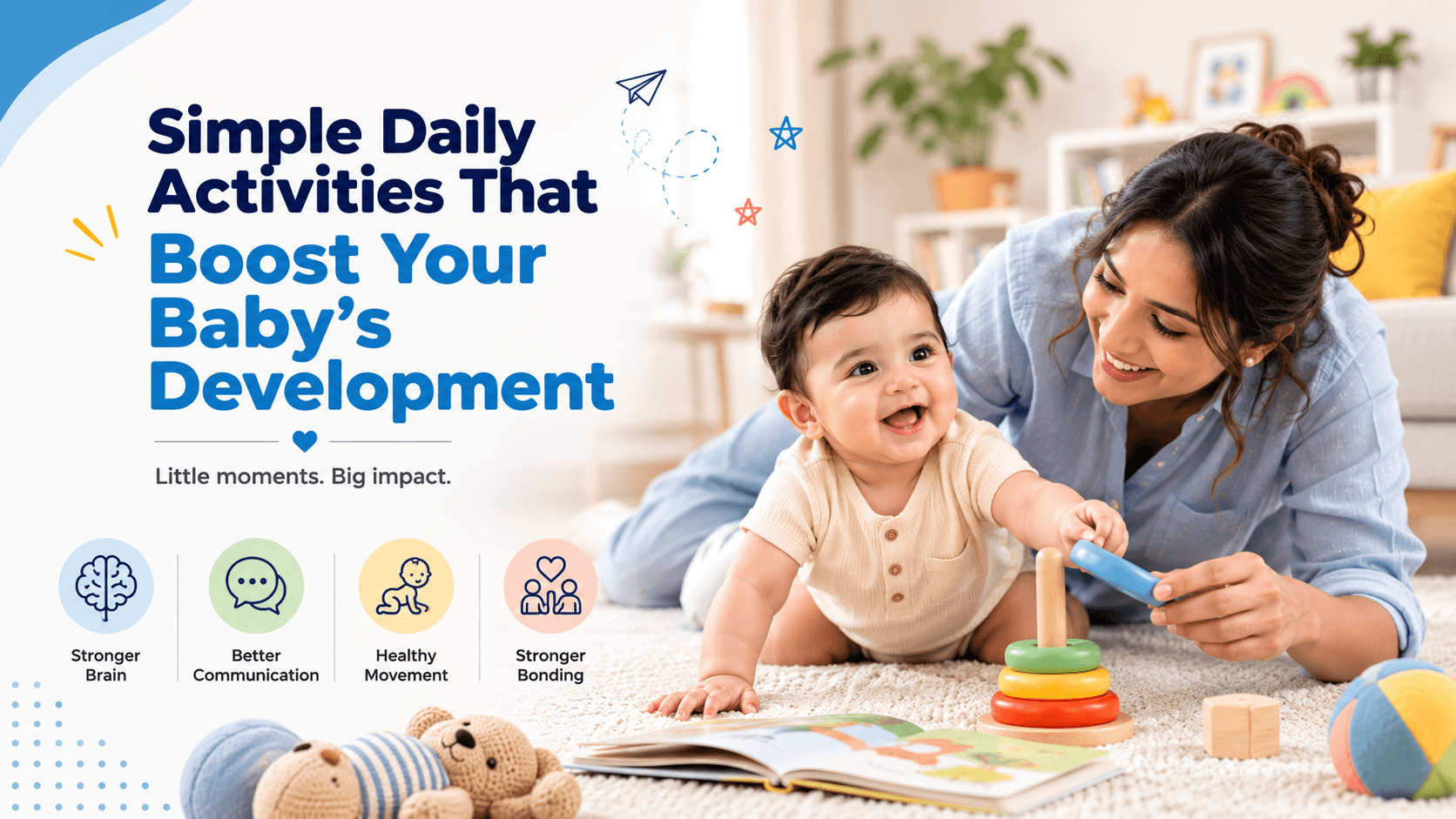
Have you ever watched your baby smile when you talk to them, grab your finger tightly, or laugh during a game of peek-a-boo?
Those little moments may seem ordinary, but they're doing something extraordinary.
Every cuddle, conversation, song, and playful interaction helps build your baby's growing brain.
Many new parents worry that they need expensive toys, flashcards, or special classes to help their baby learn.
The good news is that your baby's favourite learning tool is you.
Simple everyday moments are some of the most powerful ways to support healthy development.
This is something we see a lot at Siraa Health. Parents often feel relieved to learn that the everyday things they're already doing—talking, cuddling, and playing—are some of the best ways to help their baby grow.
Your baby's brain develops faster during the first few years of life than at almost any other time.
Every new experience creates connections between brain cells.
The more positive experiences your baby has, the stronger these connections become.
These early experiences help develop:
The goal isn't to teach your baby academics.
The goal is to create opportunities to explore, interact, and learn through everyday life.
Many parents believe learning comes from educational gadgets.
In reality, babies learn best through relationships.
Your:
are far more valuable than most toys.
This is something we see a lot at Siraa Health. Parents are often surprised that a cardboard box, wooden spoon, or simple conversation can teach more than many battery-operated toys.
Even before your baby starts talking, they're learning language.
Describe what you're doing.
For example:
Your baby is constantly listening, even if they can't respond yet.
These conversations build vocabulary long before the first word appears.
Reading isn't just for children who can talk.
Babies enjoy looking at pictures, listening to your voice, and turning pages.
Even five to ten minutes a day helps build:
Don't worry if your baby doesn't sit still.
The experience still matters.
This is something we see a lot at Siraa Health. Many parents think they're reading "too early," but babies benefit from books from the very first months of life.
Tummy time means allowing your baby to spend short periods on their tummy while awake and supervised.
This simple activity strengthens muscles needed for:
Start with just a few minutes several times a day and gradually increase the time as your baby becomes stronger.
Babies love rhythm.
Simple nursery rhymes and songs help improve:
Don't worry about having a perfect singing voice.
Your baby loves hearing your voice.
Babies don't need constant entertainment.
Give them safe opportunities to explore.
Simple toys like:
encourage curiosity and problem-solving.
Sometimes the simplest toys create the biggest learning opportunities.
Your baby's first lessons in communication happen through faces.
Looking into your baby's eyes while smiling, talking, and responding helps them understand emotions and develop social skills.
These moments also build a strong sense of security.
This is something we see a lot at Siraa Health. Parents often underestimate how much babies learn simply by watching facial expressions.
Babies learn through movement.
Allow plenty of supervised floor time where they can:
Avoid keeping babies in swings, walkers, or seats for long periods.
Movement is how babies discover the world.
It may seem like a simple game.
But peek-a-boo teaches an important concept called object permanence (understanding that people and objects still exist even when they can't be seen).
It also builds:
And it's a lot of fun.
Babies explore using their senses.
Allow them to safely touch:
Different textures support sensory development and curiosity.
Your baby communicates long before they use words.
They may:
Responding to these cues helps your baby learn that communication has meaning.
It also strengthens trust and emotional security.
This is something we see a lot at Siraa Health. Responsive parenting—simply noticing and responding to your baby's signals—is one of the most powerful ways to support healthy development.
You don't need to set aside hours every day.
Learning naturally happens while:
Talk about what you're doing.
Ask simple questions.
Smile.
Laugh together.
These everyday routines become learning opportunities.
Many parents wonder whether educational videos or apps help babies learn.
While occasional screen time may be part of family life, real-world interaction plays a much bigger role in early development.
| Active Learning Activities | Passive Activities |
|---|---|
| Talking with your baby | Watching videos for long periods |
| Reading books together | Background television |
| Singing songs | Passive screen viewing |
| Tummy time | Long periods in swings or seats |
| Exploring toys | Limited movement |
| Peek-a-boo and pretend play | Minimal interaction |
The more your baby interacts with people, the richer their learning experiences become.
You don't need a strict schedule.
Instead, look for small opportunities throughout the day.
Talk about colours, tastes, and textures.
Splash water gently, sing songs, and name body parts.
Point to birds, trees, cars, and people.
Describe what you see.
Read a book, cuddle, and sing a calming lullaby.
These predictable routines help babies feel secure while supporting language and emotional development.
This is something we see a lot at Siraa Health. Parents often discover that learning becomes easier when it fits naturally into their family's daily routine rather than feeling like another task.
Every parent wants to give their baby the best start in life.
Sometimes, however, good intentions can lead to unnecessary pressure.
Here are a few common mistakes to avoid.
It's natural to notice what other babies are doing.
You may wonder why your friend's baby is already crawling while yours isn't.
The truth is that every baby develops at their own pace.
Some babies walk earlier.
Others talk earlier.
Small differences are usually completely normal.
Try to focus on your baby's progress rather than comparing them with others.
The baby products market can make parents feel like they need dozens of educational gadgets.
In reality, your baby learns best through interaction.
Your smile, voice, cuddles, songs, books, and playtime are far more valuable than expensive toys.
This is something we see a lot at Siraa Health. Parents often feel relieved when they realise that meaningful interactions matter much more than buying the latest developmental toy.
Some parents worry they need to fill every minute with learning activities.
Babies also need time to rest, observe, and explore independently.
Development happens through a healthy balance of:
Phones, tablets, and televisions can easily become part of everyday life.
However, babies learn most effectively from real people.
Talking, singing, reading, and playing together provide experiences that screens simply cannot replace.
For infants under 18 months, it's generally recommended to avoid screen time other than occasional video calls with family members.
Sleep is one of the most important parts of healthy brain development.
During sleep, your baby's brain strengthens the connections made throughout the day.
A predictable bedtime routine and age-appropriate sleep can support:
Parents often ask,
"How do I know these activities are actually helping?"
You may notice your baby:
Remember, these skills develop gradually.
Progress is usually more important than perfection.
This is something we see a lot at Siraa Health. Parents sometimes overlook small achievements because they're waiting for the "big" milestones, but every smile, sound, and new movement is part of healthy development.
Every baby develops at their own pace.
However, it's worth speaking with your paediatrician or a child development specialist if you notice that your baby:
Trust your instincts.
You're with your baby every day, and you know them better than anyone else.
Seeking advice doesn't mean something is wrong—it simply gives you reassurance or helps identify areas where early support can make a positive difference.
This is something we see a lot at Siraa Health. Parents often tell us they were unsure whether their concerns were "serious enough." Asking questions early is always worthwhile.
Your baby doesn't need a perfect routine.
They don't need expensive toys or endless activities.
What they need most is a loving adult who talks, plays, responds, and enjoys spending time with them.
Every cuddle.
Every bedtime story.
Every silly song.
Every game of peek-a-boo.
These ordinary moments are helping build your baby's:
The good news is that you don't have to do everything perfectly.
Small, consistent moments of connection each day can have a lasting impact on your baby's development.
As your child grows, keep celebrating each new milestone—no matter how small—and remember that learning happens one joyful moment at a time.
A: Some of the best activities include talking to your baby, reading books, tummy time, singing songs, playing peek-a-boo, encouraging free play, and responding to your baby's cues. These everyday interactions support language, movement, social skills, and brain development.
A: Start with a few minutes several times a day from the newborn stage while your baby is awake and supervised. As your baby grows stronger, gradually increase the amount of tummy time.
A: No. Babies learn best through relationships and everyday experiences. Your voice, touch, eye contact, books, and simple household objects used safely can be just as valuable as expensive toys.
A: Yes. Babies begin learning language long before they say their first word. Talking throughout the day helps them recognise sounds, understand words, and build communication skills.
A: Babies learn much more from interacting with people than from watching screens. For infants under 18 months, it's generally recommended to avoid screen time except for occasional video calls with family.
A: Every baby develops at their own pace, but your paediatrician can monitor milestones during routine check-ups. If you notice delays or have concerns, don't hesitate to ask for advice.
A: If your baby isn't meeting several milestones, loses previously learned skills, rarely makes eye contact, doesn't respond to sounds, or you're concerned about their development, an assessment can provide valuable guidance and reassurance.
Get expert advice from Siraa Health doctors