
Siraa Health
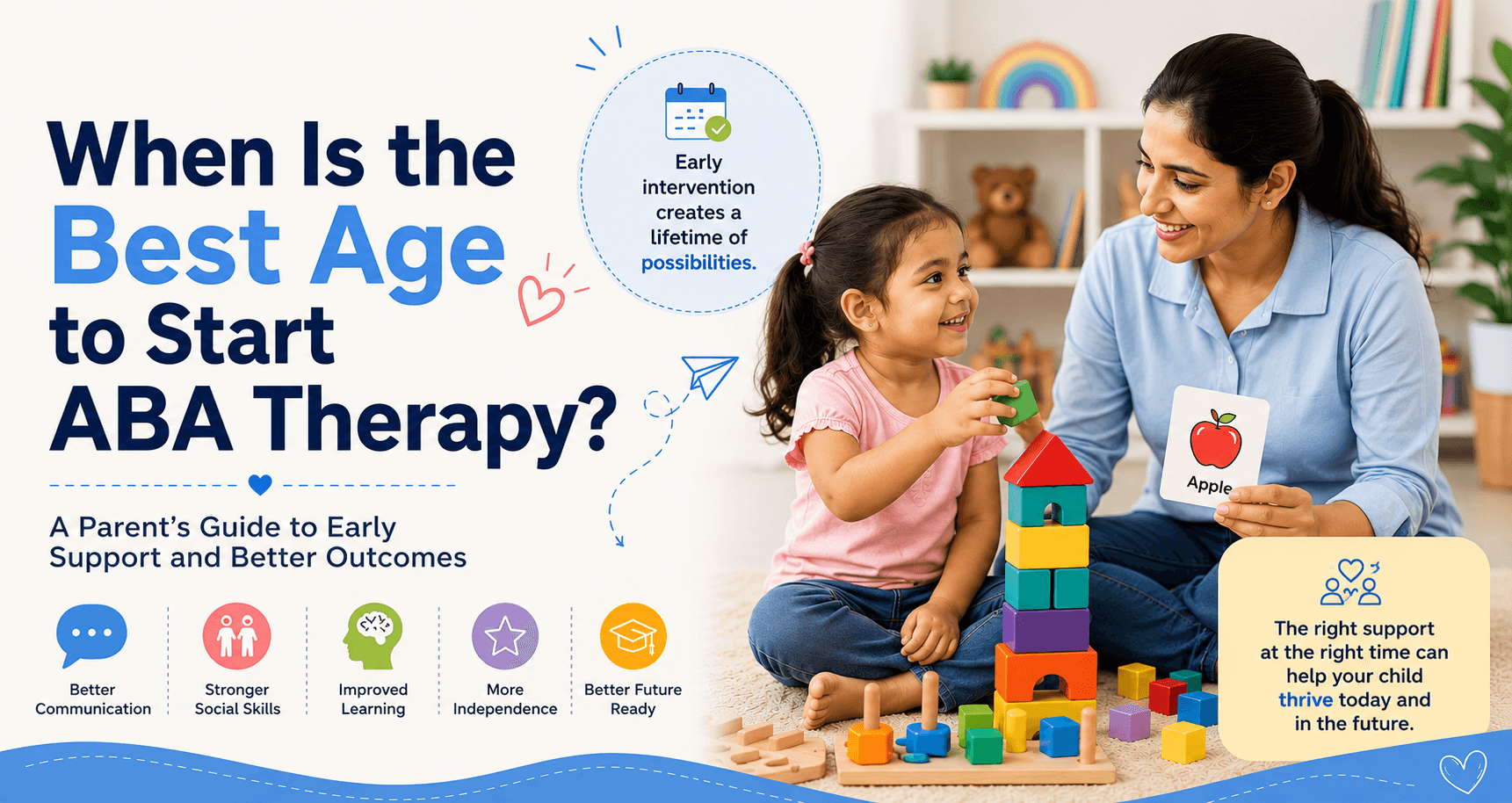
Has someone recently suggested ABA therapy for your child?
Maybe your paediatrician mentioned it after a developmental assessment.
Perhaps your child has recently been diagnosed with autism, or you've started noticing delays in communication, social interaction, or behaviour.
Now you're wondering:
"Should we start therapy now?"
"Is my child too young?"
"Should we wait and see if things improve on their own?"
Most parents worry about this.
Starting therapy can feel like a big decision, especially when your child is still very young.
The good news is that children don't need to "wait until they're older" to benefit from support. In fact, the early years of life are often the best time to help children build important communication, learning, and social skills.
This is something we see a lot at Siraa Health. Many parents initially hesitate because they hope their child will naturally catch up. After learning more about early intervention, they often feel more confident about taking the next step.
Let's explore when ABA therapy is usually recommended and why timing can make such a meaningful difference.
A child's brain grows rapidly during the first few years of life.
During this period, the brain forms millions of new connections every day.
This ability to learn, adapt, and build new skills is called neuroplasticity (the brain's ability to create new connections through learning and experience).
Because young brains are so adaptable, children often respond especially well to early learning opportunities.
That doesn't mean older children can't make progress.
It simply means the earlier children receive the right support, the more opportunities they have to practise new skills during a critical stage of development.
This is something we see a lot at Siraa Health. Families are often surprised to learn that therapy isn't about "fixing" a child—it's about helping them build skills while their brains are naturally developing at a remarkable pace.
There isn't one exact age that is right for every child.
The best time to begin ABA therapy is as soon as developmental concerns are identified and a healthcare professional recommends intervention.
For many children with autism or developmental delays, this is often between 2 and 5 years of age.
During these years, children are developing:
Supporting these skills early often leads to meaningful long-term progress.
However, it's important to remember that every child is different.
Some children begin therapy before the age of two, while others start later.
Children of all ages can continue learning and developing new skills.
One of the biggest advantages of early intervention is that children are learning foundational skills at the same time their brains are developing rapidly.
Instead of trying to change long-established habits later in life, therapy helps children build helpful skills from the beginning.
Early intervention may help children:
These skills often support success not only during childhood but throughout life.
This is something we see a lot at Siraa Health. Parents often tell us that the biggest improvements happen in everyday moments—asking for help instead of crying, joining family activities, or communicating their needs more clearly.
Not every child develops at exactly the same pace.
Some variation is completely normal.
However, certain signs may suggest that a developmental assessment would be helpful.
Your child may:
You may notice your child:
Some children may:
Some children experience:
These signs do not automatically mean your child has autism or needs ABA therapy.
They simply indicate that speaking with a developmental specialist may provide helpful guidance.
This is one of the most common questions parents ask.
The following comparison may help.
| Wait and See | Early Assessment & Intervention |
|---|---|
| Hope skills improve naturally | Understand your child's strengths and challenges early |
| Uncertainty continues | Clear guidance from specialists |
| May delay access to support | Early learning opportunities begin sooner |
| Parents often remain anxious | Families gain practical strategies and reassurance |
| Progress is monitored later | Development is supported from the beginning |
Seeking an assessment doesn't mean your child will definitely need therapy.
It simply gives you more information to make informed decisions.
This is something we see a lot at Siraa Health. Parents often say their biggest regret isn't starting therapy—it was waiting too long because they weren't sure if their concerns were valid.
One of the biggest misconceptions about ABA therapy is that it's only helpful for toddlers.
The good news is that children can benefit from ABA therapy at many different ages.
While early intervention offers the greatest opportunity to build foundational skills, older children can still make meaningful progress.
ABA therapy may help school-age children:
The focus simply changes as children grow.
For younger children, therapy may centre around communication and play.
For older children, it may focus on social relationships, emotional regulation, organisation, and independence.
This is something we see a lot at Siraa Health. Parents sometimes worry they've "missed the window," but children continue learning throughout childhood when they receive the right support.
Many parents feel guilty if their child isn't diagnosed until they are older.
If that's your situation, you're certainly not alone.
Some developmental differences become more noticeable only after children begin preschool or primary school.
Starting later doesn't mean therapy won't help.
It simply means therapists will focus on your child's current strengths, challenges, and goals.
Depending on your child's needs, therapy may target:
Progress is never about "catching up" to someone else.
It's about helping your child continue moving forward at their own pace.
Many parents imagine children sitting at desks completing worksheets.
Modern ABA therapy is very different.
For young children, therapy often looks like play.
Sessions are designed to be engaging, interactive, and enjoyable.
Children learn while playing with:
Therapists use play to teach communication, attention, and problem-solving.
Learning happens during familiar activities such as:
These everyday moments become valuable opportunities for learning.
Therapists gradually help children learn to:
These skills often improve confidence both at home and at school.
Parents are involved throughout the journey.
Therapists may teach simple strategies that fit naturally into your family's daily routine.
Small moments—like reading a bedtime story or playing with blocks—can become powerful opportunities for learning.
This is something we see a lot at Siraa Health. Children often make the greatest progress when parents feel confident using simple strategies during everyday interactions.
Therapy doesn't stop when a session ends.
Some of the most meaningful learning happens during everyday family life.
Here are a few simple ways you can support your child's development.
Describe everyday activities as they happen.
For example:
"We're washing your hands."
"Let's put your shoes on."
"The ball is red."
These simple conversations expose children to new words and build language naturally.
Every new skill deserves encouragement.
Whether your child points for the first time, uses a new word, or follows a simple instruction, celebrating progress helps build confidence.
Remember, development happens one small step at a time.
Children often feel more secure when they know what comes next.
Consistent routines for meals, playtime, bedtime, and learning can reduce anxiety and support independence.
Children learn best when they're engaged.
If your child loves dinosaurs, bubbles, trains, or music, use those interests to create opportunities for communication and interaction.
Learning becomes much more enjoyable when children are having fun.
Parents hear many different opinions online.
Let's separate facts from myths.
| Myth | Fact |
|---|---|
| My child is too young for therapy. | Early intervention is often one of the best times to begin building developmental skills. |
| Waiting won't make a difference. | Early support can help children develop communication and social skills during a period of rapid brain development. |
| ABA therapy is only for severe autism. | Children with different support needs may benefit from ABA therapy depending on their individual goals. |
| Therapy replaces parenting. | Parents are an essential part of every successful therapy programme. |
| Starting therapy means something is wrong with my child. | Therapy is simply one way to help children learn and develop new skills. |
This is something we see a lot at Siraa Health. Once parents understand what modern ABA therapy looks like, they often feel much more hopeful and confident about beginning the journey.
Consider speaking with a developmental paediatrician or child development specialist if your child:
Don't wait for certainty before asking questions.
Parents are often the first people to notice subtle developmental differences.
Seeking guidance early may provide reassurance—or help your child access support sooner if needed.
Every child develops at their own pace.
Some children reach milestones earlier, while others need a little more support along the way.
Starting ABA therapy isn't about rushing childhood or changing who your child is.
It's about recognising opportunities to help your child build communication, confidence, independence, and meaningful life skills.
The good news is that there is no "perfect" age to begin.
The best time is when your child needs support.
Whether your child is two, four, or eight years old, taking that first step can open the door to new opportunities for learning and growth.
This is something we see a lot at Siraa Health. Families often tell us that seeking help early didn't just support their child's development—it also gave them confidence, reassurance, and hope for the future.
Many children begin ABA therapy between 2 and 5 years of age, as this is a period of rapid brain development.
However, the best time to start is whenever developmental concerns are identified and a healthcare professional recommends support.
Not necessarily.
Children as young as two years old may benefit from early intervention if they show signs of developmental delays or autism.
Therapy goals are always tailored to your child's age and abilities.
Yes.
While early intervention offers many advantages, school-age children and even teenagers can continue developing:
through ABA therapy.
Some children do catch up on their own, but waiting can delay access to helpful support if it is needed.
An early developmental assessment can provide clarity and guide the best next steps.
If your child has ongoing challenges with:
a developmental assessment can help determine whether ABA therapy may be beneficial.
No.
ABA therapy is commonly used for children with autism, but some of its strategies may also help children with other developmental or behavioural challenges.
A professional assessment is needed to understand your child's individual needs.
Young children usually learn through:
Therapy focuses on helping children develop:
in a positive, engaging, and child-friendly environment.
Get expert advice from Siraa Health doctors