Siraa Health
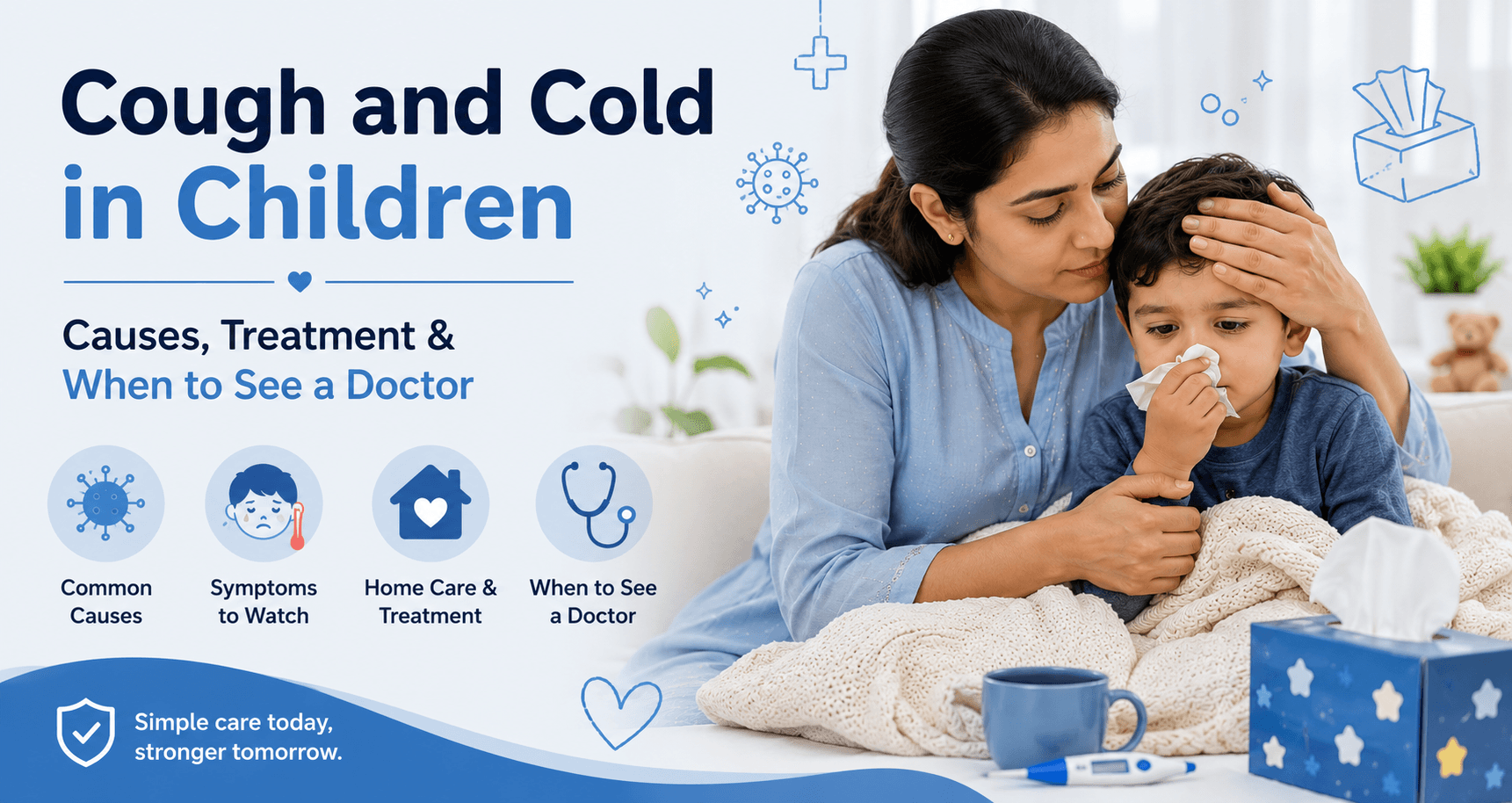
Your child wakes up with a blocked nose.
By afternoon, they're coughing.
By bedtime, they're refusing dinner and feeling miserable.
As a parent, it's natural to worry.
Most parents go through this several times every year, especially when their child starts daycare or school.
The good news is that most coughs and colds are caused by viruses and get better with time, rest, and supportive care.
Knowing how to care for your child at home—and recognising when medical attention is needed—can make these illnesses much less stressful.
This is something we see a lot at Siraa Health. Parents often feel anxious when their child develops a cough, but in most cases, it's part of a common viral infection that improves within a week or two.
Let's understand what's happening and how you can help your child recover comfortably.
Most coughs and colds are caused by viral infections.
Viruses spread easily through:
Young children are especially vulnerable because their immune systems are still developing.
It's normal for healthy children to have 6–8 colds each year, and children in daycare or preschool may experience even more.
This doesn't necessarily mean your child's immunity is weak.
It's actually part of how the immune system learns to recognise and fight different viruses.
This is something we see a lot at Siraa Health. Parents often worry that frequent colds mean something is wrong, but repeated viral infections are common during the early years.
Every child is different, but most viral colds include some combination of the following symptoms.
This is often the first sign.
The mucus may start out clear before becoming thicker or slightly yellow or green after a few days.
Note: This colour change doesn't automatically mean your child needs antibiotics.
A cough helps clear mucus from the airways.
It may be dry at first and become wetter as the illness progresses.
Sometimes the cough lasts longer than the cold itself.
Sneezing helps the body remove viruses and irritants from the nose.
It's one of the earliest symptoms of a common cold.
Some children develop a low-grade fever, especially during the first couple of days.
Not every cold causes fever.
Older children may complain of throat pain, especially during the first few days.
For younger children, you might notice reduced appetite or difficulty swallowing.
It's common for children to eat less when they're unwell.
As long as they're drinking enough fluids, this is usually not a major concern for a few days.
Your child may seem sleepier than usual and prefer quiet activities.
Rest is an important part of recovery.
Most children begin feeling better within 7–10 days.
Some symptoms may last longer.
| Symptom | Typical Duration |
|---|---|
| Runny nose | 5–10 days |
| Sneezing | 2–5 days |
| Mild fever | 1–3 days |
| Sore throat | 2–4 days |
| Cough | Up to 2–3 weeks |
A lingering cough after a cold is often normal as the airways continue to recover.
There isn't a medicine that cures the common cold.
Instead, treatment focuses on helping your child feel comfortable while their immune system fights the infection.
Offer water frequently.
For babies, continue breast milk or formula feeds.
Older children can also have soups and fresh coconut water if appropriate.
Staying hydrated helps loosen mucus and prevents dehydration.
Children often recover faster when they get enough sleep.
There's no need for complete bed rest if they feel like playing quietly.
Simply allow them to slow down and recover at their own pace.
Saline (salt water) nasal drops or sprays can help loosen mucus and make it easier for babies and young children to breathe.
A nasal aspirator (a device that gently removes mucus) may also help infants with blocked noses.
For older children, warm soups or warm water can soothe a sore throat and provide comfort.
Avoid giving very hot drinks.
If your child is older than one year, a small amount of honey may help soothe a cough.
Do not give honey to babies under one year of age, as it can be unsafe for infants.
Paracetamol or ibuprofen may be recommended for fever or discomfort, depending on your child's age and weight.
Always follow your paediatrician's advice or the dosing instructions.
Avoid giving over-the-counter cough and cold medicines to young children unless specifically advised by a healthcare professional.
This is something we see a lot at Siraa Health. Parents often feel they need a cough syrup straight away, but supportive care is usually the safest and most effective approach for uncomplicated viral colds.
One of the biggest misconceptions is that antibiotics treat every cough or cold.
They don't.
Antibiotics work against bacteria, not viruses.
Since most coughs and colds are caused by viruses, antibiotics usually won't help and may even cause unnecessary side effects.
Your doctor will only prescribe antibiotics if they suspect a bacterial infection, such as:
Many parents receive well-meaning advice from family and friends.
Let's separate myth from fact.
| Myth | Fact |
|---|---|
| Green mucus always means antibiotics are needed. | Mucus often changes colour during a normal viral cold. |
| Every cough needs cough syrup. | Many coughs improve with fluids, honey (over one year), and time. |
| Children shouldn't play at all during a cold. | Gentle play is fine if your child feels up to it. |
| Antibiotics cure viral colds. | Antibiotics only work against bacterial infections. |
| A child must eat normally to recover. | Drinking enough fluids is more important than eating full meals during the first few days. |
You can't prevent every cold.
But you can reduce the chances of infection.
Good hand hygiene is one of the simplest ways to prevent the spread of viruses.
Teach children to wash their hands before eating and after coughing or sneezing.
Encourage your child to cough or sneeze into a tissue or their elbow rather than into their hands.
Routine childhood vaccinations—and the annual flu vaccine where recommended—help protect children from several serious respiratory infections.
A balanced diet, regular physical activity, adequate sleep, and outdoor play all support a healthy immune system.
This is something we see a lot at Siraa Health. Families who focus on healthy routines often notice their children recover more comfortably and cope better with seasonal illnesses.
Most coughs and colds improve on their own within a week or two.
However, there are times when your child should be seen by a paediatrician.
Trust your instincts. If you're worried about your child's condition, it's always okay to seek medical advice.
This is something we see a lot at Siraa Health. Parents often wait because they don't want to "overreact," but we'd much rather reassure you early than see your child become more unwell.
Although uncommon, some symptoms require immediate medical attention.
These symptoms should never be ignored.
If you visit a paediatrician, the consultation is usually straightforward.
Your child's breathing, throat, ears, temperature, and chest will then be examined.
Most children do not need blood tests or X-rays for a simple viral cough and cold.
These tests are only recommended if your doctor suspects a more serious illness.
This is something we see a lot at Siraa Health. Parents are often surprised to learn that a careful examination is usually enough to diagnose a common viral infection.
While your child's immune system does the hard work, there are simple things you can do to help them feel better.
Offer small amounts of:
Frequent small sips are often easier than asking your child to drink a full glass.
Sleep helps the body recover.
Allow your child to nap if they need to, and avoid over-scheduling activities until they feel better.
A cool, well-ventilated room can make breathing easier.
Avoid exposing your child to:
These can make coughing worse.
Children often eat less during a cold.
Focus on keeping them hydrated rather than insisting they finish every meal.
Their appetite usually returns as they recover.
Extra cuddles, quiet story time, and reassurance can make a big difference.
Sometimes what children need most is simply knowing you're close by.
This is something we see a lot at Siraa Health. Children often recover more comfortably when parents focus on comfort and hydration rather than trying multiple medicines.
A common question parents ask is:
"When can my child return to school?"
Your child can usually return when they:
A mild lingering cough or runny nose doesn't always mean they need to stay home.
However, encourage good hand hygiene and teach your child to cover coughs and sneezes.
While it's impossible to avoid every infection, healthy habits can reduce the spread of viruses.
Small habits can make a big difference throughout the year.
Watching your child struggle with a cough or blocked nose can be worrying.
The good news is that most coughs and colds are mild viral infections that improve with:
Knowing what to expect can help you feel more confident and less anxious when your child becomes unwell.
Remember, you're not expected to have all the answers.
If something doesn't feel right or your child's symptoms aren't improving, don't hesitate to speak with a paediatrician.
This is something we see a lot at Siraa Health. Sometimes all parents need is reassurance that their child is recovering normally—and when extra care is needed, early assessment helps children recover safely.
Most colds improve within 7–10 days, while a cough may continue for up to three weeks.
As long as your child is gradually improving and breathing comfortably, this is often normal.
No.
Mucus often changes from clear to yellow or green during a viral cold.
Colour alone doesn't mean your child has a bacterial infection or needs antibiotics.
Many over-the-counter cough and cold medicines are not recommended for young children.
It's best to speak with your paediatrician before giving any medication.
Helpful home remedies include:
Seek medical advice if your child:
If your child feels well enough and doesn't have a high fever, gentle outdoor activity is usually fine.
Avoid crowded places where viruses can spread easily.
It's normal for young children to have 6–8 colds each year, especially if they attend daycare or preschool.
Their immune system is still developing and learning to fight new viruses.
Get expert advice from Siraa Health doctors