
Siraa Health
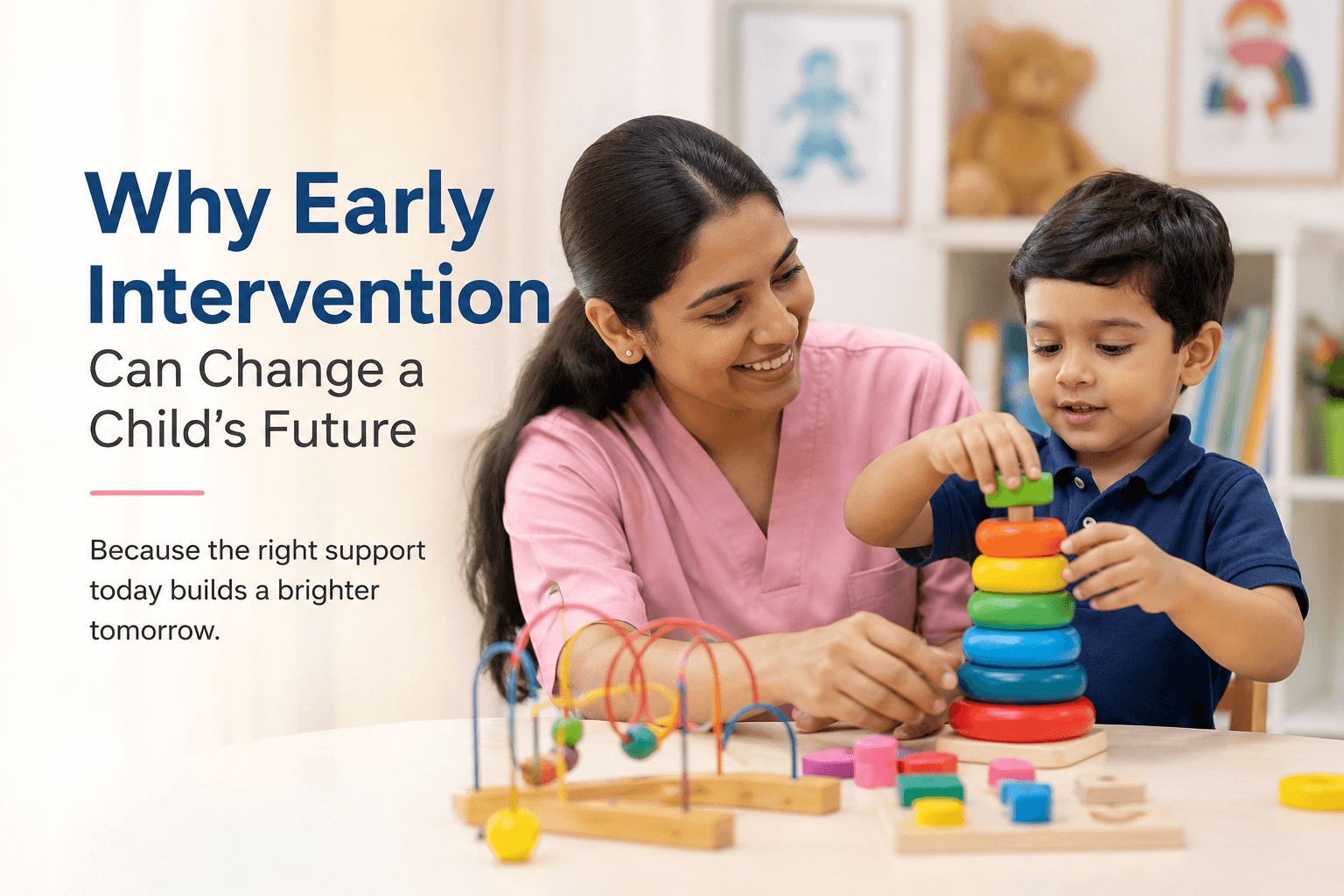
Have you ever watched another child the same age as yours and wondered, "Should my child be doing that too?"
Maybe your toddler isn't speaking as much as other children. Maybe they avoid eye contact, struggle to sit still, or seem frustrated when trying to communicate.
As a parent, it's natural to feel worried, confused, or even guilty. Most parents worry about this at some point.
The good news is that children grow and learn at different speeds.
But when there are signs that a child may need extra support, getting help early can make a huge difference.
This is where early intervention comes in.
Let's explore what it means, why it matters, and how it can positively shape your child's future.
Early intervention refers to identifying and supporting children who may be experiencing delays in their development.
This support can include:
The goal is simple: help children develop important skills during the years when their brains are growing the fastest.
This is something we see a lot at Siraa Health.
Many parents worry they are overreacting, only to discover that a little support can make a big difference.
Developmental milestones are skills that most children achieve within a certain age range.
These milestones help parents and doctors understand how a child is growing and learning.
Examples include:
Examples include:
Examples include:
Examples include:
Every child develops differently. However, significant delays may indicate that additional support could be helpful.
A child's brain develops more rapidly during the first five years than at almost any other time in life.
During these years, the brain is constantly creating new connections.
Experts often refer to this as neuroplasticity (the brain's ability to learn, adapt, and form new pathways).
Because the brain is so adaptable during early childhood, support provided during these years can have a much greater impact than support given later.
Think of it like building a house.
It's much easier to adjust the foundation while construction is happening than after the house is complete.
This is something we see a lot at Siraa Health. Children often make remarkable progress when support begins early.
Not every delay means something is wrong.
However, certain signs may suggest that a developmental assessment could be helpful.
Most parents notice these differences before anyone else does. Trusting your instincts is often the first step.
Early intervention isn't about labelling children.
It's about giving them the tools they need to succeed.
Children who struggle with speech or language often become frustrated because they cannot express themselves.
Speech and communication support can help children learn to communicate more effectively and confidently.
Children learn how to connect with others through guided play and structured activities.
This can improve friendships, confidence, and emotional wellbeing.
Many children experience strong emotions but don't yet have the skills to manage them.
Behavioural therapy can teach children healthier ways to express feelings and cope with challenges.
Whether it's eating independently, dressing themselves, or following routines, early support can help children develop everyday life skills.
This is something we see a lot at Siraa Health. Small improvements often lead to big increases in confidence for both children and parents.
You may have heard the term neurodivergence.
Neurodivergent children experience the world differently. This may include children with:
Early intervention does not try to "change" who a child is.
Instead, it helps children build skills, reduce frustrations, and navigate daily life more comfortably.
The earlier support begins, the more opportunities children have to develop skills that help them thrive.
Professional support is valuable, but parents play the biggest role in a child's development.
Play is one of the most effective ways children learn.
Building blocks, pretend play, puzzles, and outdoor games all support development.
Children learn best when they are engaged and having fun.
Comparing your child to others often creates unnecessary anxiety.
Focus on your child's individual progress instead.
This is something we see a lot at Siraa Health. Parents often feel less pressure when they focus on growth rather than comparison.
Consider speaking with a developmental paediatrician or child development specialist if:
You do not need to wait until a problem becomes severe.
Here's what to do: seek guidance early and ask questions.
Sometimes reassurance is all that's needed. Other times, early support can make a meaningful difference.
Many parents feel anxious about assessments.
In reality, they are usually straightforward and child-friendly.
A specialist may:
The goal is not to judge your parenting.
The goal is to understand your child better and identify ways to support their growth.
Parenting comes with plenty of uncertainty.
It's normal to question whether you're doing enough or whether your child is developing as expected.
The good news is that early intervention gives children opportunities, not labels.
When developmental challenges are recognised early, children often gain skills, confidence, and independence that can benefit them for years to come.
If you have concerns about your child's developmental milestones, trust your instincts and seek guidance.
Sometimes a simple conversation can provide reassurance, and sometimes it can open the door to support that changes a child's future.
No matter where your child is on their journey, progress is always possible.
Get expert advice from Siraa Health doctors