
Siraa Health
"My 2-year-old doesn't respond when I call his name."
"My daughter loves spinning the wheels on her toy car but never pretends to drive it."
"Everyone tells me boys talk late… but should I still be worried?"
If these thoughts have crossed your mind, you're not alone.
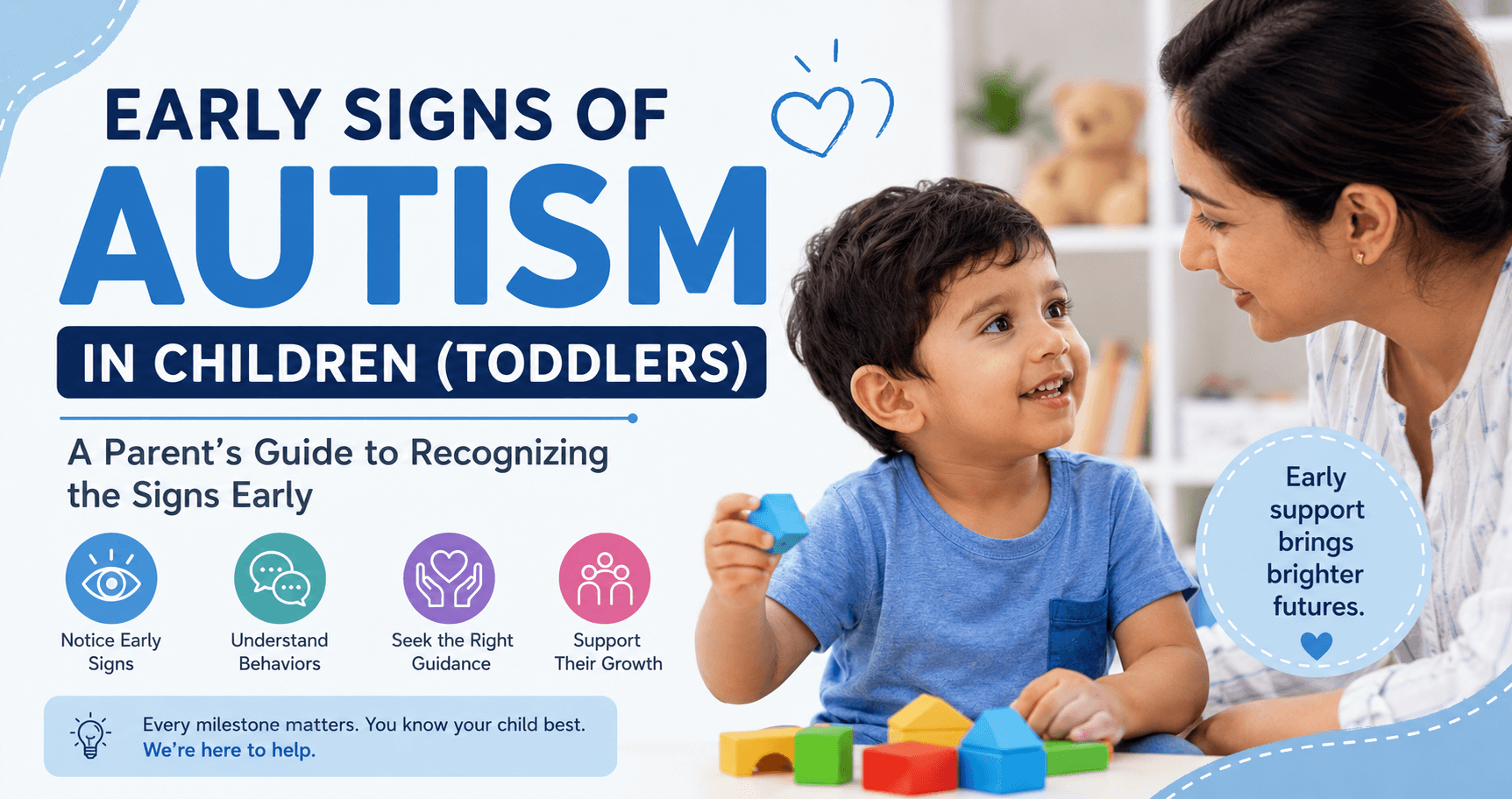
Most parents notice subtle changes long before anyone else. Sometimes those differences are simply part of your child's unique personality. Other times, they can be early signs of autism in children, and recognising them early gives your child the best opportunity to receive the right support if needed.
The good news is that having one or two of these signs does not automatically mean your child has autism. Autism is diagnosed by looking at a child's overall development—not one behaviour in isolation.
This is something we see a lot at Siraa Health. Parents often worry that they're overthinking things, but asking questions early is always better than ignoring concerns.
Some of the most common autism symptoms in toddlers include:
One behaviour alone does not confirm autism.
Doctors look at how several social, communication, behavioural, and developmental signs come together over time.
This is something we see a lot at Siraa Health. Some children referred for autism are simply late talkers, while others benefit greatly from early developmental support after an assessment.
Autism Spectrum Disorder (ASD) is a developmental condition that affects how children communicate, interact socially, and experience the world around them.
The word "spectrum" means autism looks different in every child.
Some children speak fluently but struggle socially.
Others may have delayed speech, sensory sensitivities, or need additional support with everyday activities.
Autism is not caused by parenting, and it isn't something children "grow out of."
Many autistic children have wonderful strengths, including:
This is something we see a lot at Siraa Health. Helping parents understand both their child's strengths and challenges creates a more positive and supportive journey.
Some early autism symptoms can be noticed during the first year of life.
However, many parents first notice differences between 18 months and 3 years, when communication and social skills usually develop rapidly.
Most toddlers during this stage begin to:
If these skills aren't developing as expected, it doesn't automatically mean autism, but it does mean your child may benefit from a developmental assessment.
No single sign confirms autism.
Doctors look for patterns across communication, behaviour, and social interaction.
Many toddlers naturally look at parents while playing, smiling, or asking for help.
Children with autism may make less eye contact or look away more often.
Remember, reduced eye contact alone is not enough to diagnose autism.
This is something we see a lot at Siraa Health. Parents often focus only on eye contact, but it's just one part of a child's overall communication.
Most toddlers turn when their name is called, even if they're busy playing.
If your child consistently doesn't respond—even after hearing has been checked—it may be worth discussing with your doctor.
Some children with autism:
Speech delay alone does not always mean autism.
Pointing is more than asking for something.
Children also point simply to share experiences.
For example:
Many autistic toddlers point less frequently.
By around two years of age, children usually enjoy pretending.
Examples include:
Children with autism may use toys differently, such as spinning wheels repeatedly instead of pretending.
Playing independently is perfectly normal.
However, toddlers usually enjoy involving parents in games from time to time.
If your child consistently avoids interaction or shared play, it may be worth discussing with a developmental specialist.
This is something we see a lot at Siraa Health. Parents often describe their child as "happy alone" rather than interested in interactive games.
Many toddlers repeat activities they enjoy.
Autism-related repetitive behaviours tend to occur more frequently and may include:
Many toddlers like routines.
Children with autism may become extremely distressed when routines change.
For example:
Small changes can feel overwhelming.
Some autistic children experience the world differently.
They may:
Sensory differences vary greatly between children.
Toddlers naturally enjoy showing parents exciting discoveries.
Children with autism may smile when something is enjoyable but may not always look towards another person to share the experience.
This behaviour is called joint attention, and it is an important part of early social development.
This is something we see a lot at Siraa Health. Parents often notice this before speech delays—they feel like their child enjoys things alone rather than together.
One of the biggest concerns parents have is knowing what is normal.
Here's a simple comparison.
| Typical Toddler Development | Possible Autism Signs |
|---|---|
| Responds to their name most of the time | Rarely responds consistently |
| Uses eye contact during games | Limited eye contact across many situations |
| Points to show interesting things | Rarely points to share interest |
| Enjoys pretend play | Limited pretend play |
| Copies parents | Rarely imitates others |
| Plays alone sometimes | Prefers solitary play most of the time |
| Adapts to routine changes | Becomes very distressed by small changes |
| Has occasional tantrums | Repetitive behaviours with communication differences |
Remember, this table is only a guide.
No checklist can diagnose autism.
Many behaviours that worry parents are actually common during toddlerhood.
Your child may still be developing typically if they:
Similarly, speech delay, hearing problems, anxiety, and other developmental differences can look similar to autism.
This is why a professional developmental assessment is so valuable.
This is something we see a lot at Siraa Health. Families often arrive worried after reading online checklists, and many leave reassured after understanding their child's individual developmental pattern.
One of the most common questions parents ask is:
"What signs should I look for at my child's age?"
Every child develops at their own pace, so these milestones are only a guide. Having one delayed skill doesn't necessarily mean autism, but a pattern of differences may be worth discussing with your paediatrician.
This is something we see a lot at Siraa Health. Parents often feel reassured when they understand which behaviours are part of normal development and which deserve a closer look.
By their first birthday, many babies enjoy interacting with people around them. They usually smile back, respond to familiar voices, and begin using simple gestures.
Some possible early autism symptoms at this age include:
Remember, babies develop at different rates. These signs should always be considered alongside your child's overall development.
Around 18 months, toddlers become much more social and curious. They often point to interesting things, copy adults, and begin saying simple words.
Possible autism warning signs include:
If several of these behaviours occur together, it's a good idea to discuss them with your child's doctor.
Many parents search online for autism signs in 2 year old children because this is often when developmental differences become more noticeable.
A 2-year-old with possible autism may:
The good news is that this is also an age when early intervention can be especially beneficial if additional support is needed.
This is something we see a lot at Siraa Health. Many families first seek advice around their child's second birthday because language and social milestones become easier to compare with other children.
By three years of age, most children enjoy conversations, imaginative play, and interacting with family members and friends.
Possible autism signs in 3 year old children include:
Many children who receive support around this age continue to build strong communication, learning, and social skills over time.
Parents often ask whether a certain behaviour is "normal" for a specific age.
The answer is that no single milestone or behaviour can diagnose autism.
Doctors look at:
Looking at the whole picture is much more helpful than focusing on one checklist or one milestone.
This is something we see a lot at Siraa Health. Parents often arrive worried about one specific behaviour, but a developmental assessment helps us understand how all the pieces fit together.
Noticing a few early signs of autism in children can feel overwhelming. Many parents wonder if they should wait a few months or seek help right away.
Here's what to do.
Instead of focusing on one behaviour, pay attention to patterns over several weeks.
Ask yourself questions like:
Writing these observations down can be very helpful when you meet your child's doctor.
This is something we see a lot at Siraa Health. Parents who keep a simple diary often feel more confident explaining their concerns.
Every child develops at their own pace.
One toddler may start talking at 15 months, while another may speak more after age two and still develop typically.
Rather than comparing your child with friends or siblings, compare their progress with expected developmental milestones and discuss any concerns with your paediatrician.
While waiting for an assessment, continue encouraging communication through play.
Simple activities include:
These interactions support language and social development in all children.
This is something we see a lot at Siraa Health. Parents often worry they need expensive toys, but some of the best learning happens during everyday routines.
One delayed milestone doesn't always mean autism.
However, it's a good idea to speak with your paediatrician if your child has more than one of the following signs:
You don't need to wait for someone else to notice before asking for help.
Most parents have a strong instinct when something doesn't feel right.
The good news is that an evaluation doesn't automatically lead to an autism diagnosis.
Sometimes parents leave reassured, while other children benefit from additional support.
This is something we see a lot at Siraa Health. Parents often tell us they wish they had trusted their instincts sooner.
One of the biggest fears parents have is not knowing what an assessment involves.
Fortunately, it's usually much simpler than people expect.
A developmental assessment is based on observation, conversation, and play.
The specialist may:
Sometimes additional hearing or speech assessments are also recommended to better understand your child's needs.
There are no injections, painful procedures, or scans involved in a routine autism assessment.
The goal is simply to understand how your child is developing.
If a child is diagnosed with autism or another developmental difference, starting support early can make a meaningful difference.
Early intervention simply means providing therapies and guidance during the years when a child's brain is developing rapidly.
Depending on your child's needs, support may include:
The goal isn't to change who your child is.
The goal is to help them communicate, learn, build relationships, and become more independent in everyday life.
This is something we see a lot at Siraa Health. Children often make the greatest progress when families, therapists, and doctors work together from an early stage.
If you're short on time, here's what to remember:
The good news is that recognising concerns early gives families more options and more time to support their child's development.
Reading about autism warning signs can be reassuring for some parents and worrying for others.
Try to remember that no article or online checklist can diagnose autism.
Some children who show a few early autism symptoms are simply developing at their own pace.
Others may have speech delays, hearing concerns, or different developmental needs.
Some children will be diagnosed with autism and go on to thrive with the right support.
If you're concerned, the kindest thing you can do is ask questions and seek professional guidance.
This is something we see a lot at Siraa Health. Parents often tell us they felt anxious before an evaluation, but afterwards they felt relieved to finally have answers and a clear plan for supporting their child.
A: Early signs of autism in toddlers may include limited eye contact, not responding to their name, delayed speech, reduced pointing or waving, repetitive behaviours, and limited pretend play. One sign alone doesn't mean a child has autism, so it's important to look at the overall pattern of development.
A: Some early signs may be noticed during the first year of life, but many parents first recognise differences between 18 months and 3 years. This is when language, social interaction, and play skills usually develop rapidly.
A: No. Some children naturally make less eye contact, especially when they are shy, tired, or focused on an activity. Poor eye contact becomes more concerning when it occurs alongside other developmental differences, such as delayed communication or limited social interaction.
A: Not necessarily. Some children are late talkers without having autism. However, if delayed speech is combined with signs such as limited eye contact, not responding to their name, or reduced social interaction, it's a good idea to discuss your concerns with a paediatrician.
A: In some children, autism can be identified before the age of two by experienced developmental specialists. However, every child develops differently, and diagnosis is based on a detailed assessment rather than a single behaviour or milestone.
A: Start by discussing your concerns with your paediatrician or a developmental paediatrician. They may recommend a developmental assessment to better understand your child's strengths, challenges, and whether any additional support would be helpful.
A: Yes. Many autistic children grow into happy, confident, and successful adults. With understanding, appropriate support, and early intervention when needed, children can develop important communication, learning, and life skills while embracing their unique strengths.
Get expert advice from Siraa Health doctors