
Siraa Health
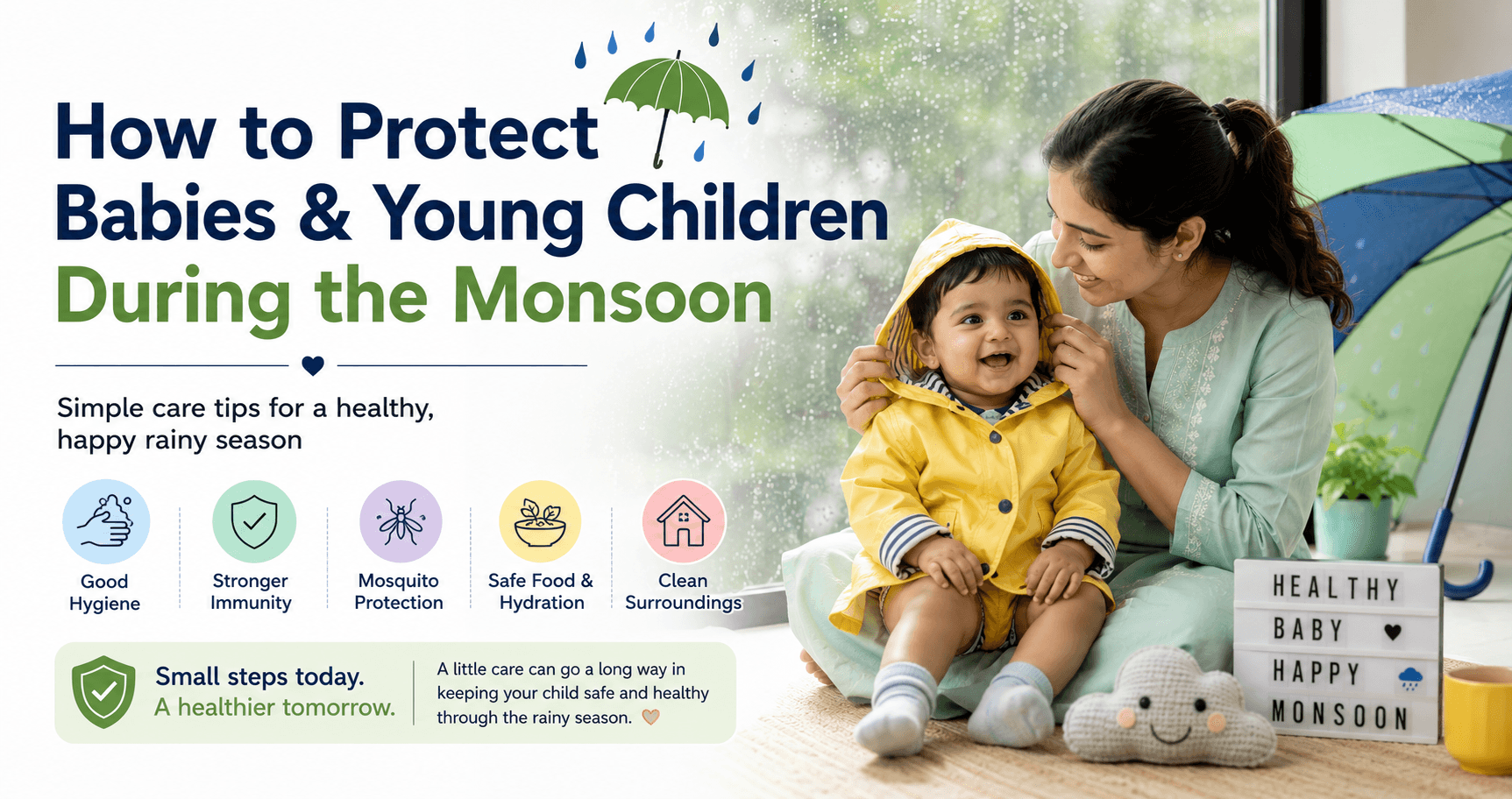
The first rain of the season is always exciting.
Cooler weather, fresh air, and the smell of rain often make families want to spend more time outdoors.
But if you're a parent of a baby or young child, the monsoon season may also bring new worries.
"Is it safe to take my baby outside?"
"How can I protect my child from infections?"
"What if they catch a cold or mosquito-borne illness?"
Most parents worry about this.
The good news is that you don't need to keep your child indoors all season. A few simple precautions can go a long way in protecting your baby from common monsoon illnesses while still allowing them to enjoy the season safely.
This is something we see a lot at Siraa Health. Parents often feel overwhelmed by the number of things they need to watch out for during the rainy season, but with the right guidance, monsoon care can become much simpler.
Babies and young children have developing immune systems.
That means their bodies are still learning how to fight infections.
During the monsoon, humidity increases, stagnant water collects in many places, and germs spread more easily.
This creates the perfect environment for:
Young children also explore the world by touching everything around them and often put their hands or toys into their mouths, making it easier for germs to spread.
This is something we see a lot at Siraa Health. Many seasonal illnesses are preventable with simple everyday habits.
The rainy season brings a few health concerns that parents should be aware of.
Children are more likely to catch viral infections during the monsoon because viruses spread easily in crowded indoor spaces.
Most viral illnesses improve with rest, fluids, and supportive care.
Standing water after rainfall creates breeding grounds for mosquitoes.
Diseases such as dengue and malaria become more common during this season.
Preventing mosquito bites is one of the most effective ways to reduce risk.
Food and water can become contaminated more easily during the rainy season.
Children may develop:
Good hand hygiene and safe food preparation play a big role in prevention.
Constant dampness can irritate a child's delicate skin.
Some children may develop:
Keeping your child's skin clean and dry helps reduce these problems.
Small daily habits can make a big difference.
Babies touch almost everything around them.
Wash your hands before feeding your child.
Teach older children to wash their hands:
Simple handwashing is one of the best ways to prevent infections during monsoon.
Choose lightweight cotton clothing that absorbs sweat and dries easily.
Avoid leaving wet clothes on your child for long periods.
If your child gets caught in the rain, change them into dry clothes as soon as possible.
Wet shoes and socks create the perfect environment for fungal infections.
If your child plays outside, dry their feet thoroughly afterwards.
Clean footwear regularly during the rainy season.
Always offer clean drinking water.
If your child is old enough to drink water, ensure it has been filtered or boiled when appropriate.
Avoid roadside drinks or water from uncertain sources.
This is something we see a lot at Siraa Health. Many stomach infections can be prevented simply by paying attention to drinking water and food hygiene.
Routine childhood vaccinations remain one of the best ways to protect your child throughout the year.
Keeping vaccinations up to date reduces the risk of several serious infections.
Parents often assume children don't need as much water during cooler weather.
In reality, children can still become dehydrated.
Encourage regular fluids throughout the day.
Foods rich in vitamins and minerals help support your child's immune system.
Freshly prepared meals are usually the safest choice.
This is something we see a lot at Siraa Health. Parents are often surprised that dehydration can still happen even when the weather feels cool.
Mosquito bites are one of the biggest concerns during monsoon.
Fortunately, simple precautions can make a big difference.
Mosquitoes breed in stagnant water.
Check regularly for water collecting in:
Empty standing water frequently.
Choose clothing that covers the arms and legs when mosquitoes are active, especially during the early morning and evening.
Light-coloured clothing can also help make mosquitoes easier to spot.
Keep windows screened where possible and consider mosquito nets for infants during sleep.
If using mosquito repellents, choose products that are appropriate for your child's age and follow the instructions carefully.
Many children develop sniffles during the rainy season.
Here's a simple guide.
| Common Viral Cold | When You Should Seek Medical Advice |
|---|---|
| Mild runny nose | High fever that persists or returns |
| Occasional cough | Difficulty breathing or rapid breathing |
| Mild fever | Child is unusually sleepy or difficult to wake |
| Playing between symptoms | Refuses fluids or shows signs of dehydration |
| Eating a little less | Persistent vomiting or diarrhoea |
| Symptoms improve in a few days | Rash, severe pain, or symptoms getting worse |
Remember, every child is different.
If your parental instinct tells you something isn't right, it's always okay to ask for medical advice.
This is something we see a lot at Siraa Health. Parents know their children best, and trusting those instincts often leads to timely care.
Rainy days don't have to mean endless screen time.
The monsoon is a wonderful opportunity to spend quality time together while supporting your child's development.
Here are a few simple indoor activities that are both fun and educational.
Reading helps build language, imagination, and attention.
Even 15–20 minutes of reading together every day can strengthen your child's communication skills while creating special family moments.
Children still need opportunities to move.
Try:
Physical activity supports healthy growth and helps children burn energy even when they can't play outside.
Encourage activities such as:
These activities strengthen fine motor skills, creativity, and problem-solving.
Talk with your child throughout the day.
Describe what you're cooking, ask questions, tell stories, or simply chat during meals.
These everyday conversations support language development more than many parents realise.
This is something we see a lot at Siraa Health. Parents often underestimate how much learning happens during ordinary moments at home.
Good hygiene is one of the easiest ways to reduce the risk of seasonal infections.
Try to make these habits part of your family's daily routine.
Especially:
Babies often put toys into their mouths.
Wash frequently used toys with mild soap and water, especially during the rainy season.
Avoid water collecting around your home.
Clean bathrooms, balconies, and outdoor areas regularly to reduce mosquito breeding.
Fresh produce should always be washed well before eating or cooking.
Damp clothes, towels, and bedding can encourage fungal growth and unpleasant odours.
Make sure they dry completely before reuse.
This is something we see a lot at Siraa Health. Small hygiene habits practised consistently can significantly reduce seasonal illnesses.
Parents naturally want to keep their children safe.
Sometimes, however, a few common mistakes can increase the risk of illness.
Cool weather doesn't always mean children need multiple heavy layers.
Too many clothes can cause sweating, making children uncomfortable and increasing the risk of skin irritation.
Choose breathable layers that can easily be added or removed.
Many families focus only on avoiding rain but forget that mosquitoes are one of the biggest health risks during the monsoon.
Regularly inspect your home for stagnant water and use age-appropriate mosquito protection.
Wet clothing lowers comfort and may contribute to skin irritation.
If your child gets wet, dry them thoroughly and change them into clean, dry clothes as soon as possible.
Street food and uncovered foods are more likely to become contaminated during the rainy season.
Freshly cooked home meals are usually the safest option for young children.
Many viral illnesses improve on their own.
However, some infections require prompt medical attention.
Trust your instincts if your child seems unusually unwell.
This is something we see a lot at Siraa Health. Parents often say they were unsure whether they were "overreacting." Asking for advice early is always better than waiting until symptoms become severe.
Many coughs, colds, and mild fevers improve within a few days.
However, you should seek medical advice if your child:
Don't wait until your child becomes seriously unwell.
Early medical advice can provide reassurance and help identify conditions that may need treatment.
This is something we see a lot at Siraa Health. Parents know their children better than anyone else, and their observations are often the first clue that something needs attention.
The rainy season brings cooler weather, puddles, family time, and plenty of opportunities for fun.
It also brings a few extra health challenges.
The good news is that most common monsoon illnesses can be reduced with simple everyday habits like:
You don't have to keep your child indoors all season.
With a little preparation, your family can enjoy everything the monsoon has to offer while staying healthy and safe.
Every rainy day is another chance to create happy memories together—and a few simple precautions can help make those memories worry-free.
Yes, as long as the weather is safe and your baby is dressed appropriately.
Avoid heavy rain, waterlogged areas, and places where mosquitoes are common.
Change wet clothes promptly after coming indoors.
The monsoon creates warm, humid conditions that help viruses, bacteria, and mosquitoes thrive.
Children also spend more time indoors together, making infections easier to spread.
You can reduce the risk by:
Choose:
Avoid:
Not necessarily.
Outdoor play is healthy when conditions are safe.
Avoid:
Ensure your child changes into dry clothes afterwards.
Encourage:
There is no single food or supplement that prevents illness, but healthy habits support your child's immune system.
Seek medical advice if your child has:
Or if you are worried about how they are behaving or recovering.
Get expert advice from Siraa Health doctors