Siraa Health
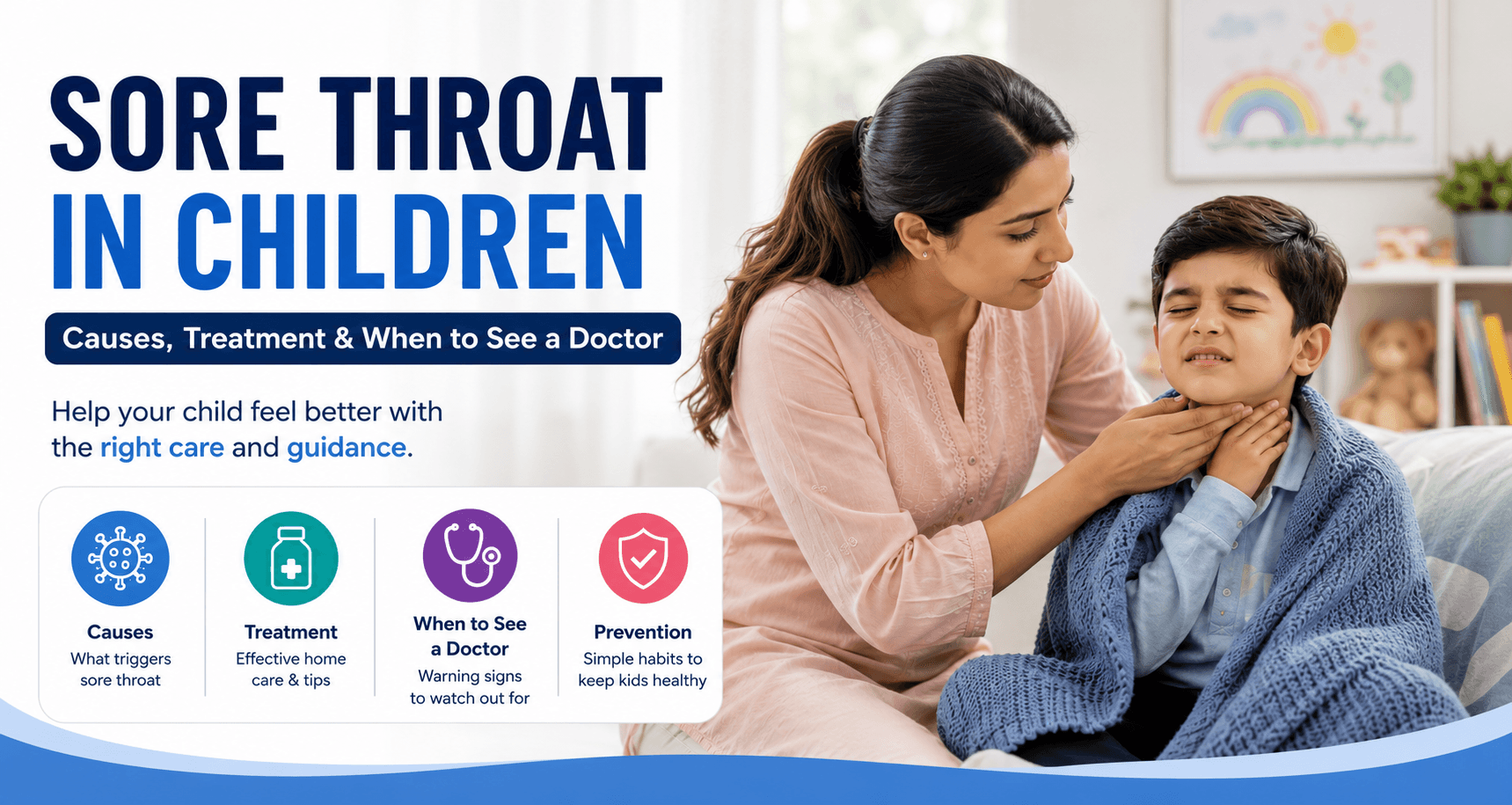
"Mom, it hurts when I swallow."
As a parent, hearing those words can instantly make you worry.
Your child suddenly doesn't want to eat, complains of throat pain, and may even develop a fever.
Questions that naturally come to mind include:
The good news is that most sore throats in children are caused by viral infections and improve with rest, fluids, and supportive care.
However, some children develop bacterial infections that need medical treatment.
Knowing the difference can help you care for your child confidently while recognising when it's time to see a doctor.
This is something we see a lot at Siraa Health. Parents often assume every sore throat needs antibiotics, but many children recover well with simple home care.
Let's look at what causes sore throats, how to help your child feel better, and when medical attention is important.
A sore throat simply means the tissues at the back of your child's throat have become inflamed (red and irritated).
Several different conditions can cause this.
Viruses are the most common cause of sore throats in children.
Your child may also have:
These symptoms often improve within a week.
Antibiotics do not work against viral infections.
Some sore throats are caused by bacteria.
One of the most common bacterial infections is Strep Throat (a throat infection caused by Streptococcus bacteria).
Children with bacterial sore throats may have:
These infections may require antibiotics after assessment by a doctor.
The tonsils are two small glands at the back of the throat.
When they become infected and swollen, it's called tonsillitis.
Tonsillitis can be caused by either viruses or bacteria.
Children often complain of:
This is something we see a lot at Siraa Health. Parents often think white spots always mean antibiotics, but viral tonsillitis can also cause similar changes.
Sometimes a sore throat isn't caused by an infection at all.
Postnasal drip (mucus dripping down the throat) from allergies can cause irritation.
Children may also have:
Children who sleep with their mouth open may wake up with a dry, scratchy throat.
This often improves after drinking water and usually isn't linked to an infection.
Every child experiences symptoms differently.
Some children only complain of mild discomfort, while others may refuse food completely.
Common symptoms include:
Babies and toddlers can't always tell you their throat hurts.
Instead, you may notice they:
This is something we see a lot at Siraa Health. Many toddlers don't point to their throat—they simply stop eating or become unusually cranky.
One of the biggest questions parents ask is:
"How do I know if it's viral or bacterial?"
The truth is that symptoms often overlap, which is why your paediatrician may sometimes need to examine your child or perform a throat swab if bacterial infection is suspected.
Here's a simple comparison:
| Viral Sore Throat | Bacterial (Strep) Sore Throat |
|---|---|
| Runny nose | Usually no runny nose |
| Cough | Usually no cough |
| Mild fever | High fever |
| Hoarse voice | Normal voice |
| Gradual onset | Sudden onset |
| Usually improves in 5–7 days | May need antibiotics |
| Often occurs with a cold | Often severe throat pain and swollen tonsils |
Remember: Symptoms alone can't always confirm the cause. If you're unsure, your doctor can help determine the best treatment.
Most children with viral sore throats recover well at home.
Here are a few simple ways to help your child feel more comfortable.
A sore throat can make swallowing uncomfortable.
Offer frequent small sips of:
Keeping your child hydrated is one of the most important parts of recovery.
Choose foods that are easy to swallow, such as:
Avoid spicy, salty, or very crunchy foods until your child's throat feels better.
Warm (not hot) drinks may soothe throat discomfort.
Older children often enjoy:
If your child is over one year old, a small spoon of honey may help soothe the throat and reduce coughing.
Never give honey to babies younger than one year.
The immune system works best when children get enough sleep.
Allow your child to rest and avoid overly busy activities until they feel better.
If your child has fever or significant discomfort, your paediatrician may recommend:
The dose depends on your child's age and weight.
Avoid giving antibiotics unless they have been prescribed by your doctor.
This is something we see a lot at Siraa Health. Parents often ask for antibiotics immediately, but unnecessary antibiotics won't help viral infections and may contribute to antibiotic resistance.
Home remedies can help relieve symptoms, but they do not cure infections.
Supportive remedies include:
The goal is to keep your child comfortable while their body fights the infection.
One of the biggest misconceptions is that every sore throat needs antibiotics.
The answer is no.
Most sore throats in children are caused by viruses, and antibiotics only work against bacteria.
Giving antibiotics when they aren't needed won't help your child recover faster. It may also cause side effects such as:
Over time, unnecessary antibiotic use can also contribute to antibiotic resistance, making some bacterial infections harder to treat.
If your paediatrician suspects a bacterial infection such as strep throat, they may recommend a throat swab or prescribe antibiotics based on your child's symptoms and examination.
This is something we see a lot at Siraa Health. Many parents feel disappointed when antibiotics aren't prescribed, but supportive care is often the safest and most effective treatment for viral sore throats.
Strep throat is a bacterial infection caused by Group A Streptococcus bacteria.
Unlike a common viral sore throat, strep throat usually develops suddenly and can make children feel quite unwell.
Your paediatrician may perform a throat swab or diagnose it based on your child's symptoms and examination.
If strep throat is confirmed, antibiotics help:
Yes.
Many viral and bacterial throat infections spread through:
If one child in the family becomes ill, encourage everyone to:
Simple hygiene habits can help reduce the spread of infection.
Most sore throats improve within 5 to 7 days.
However, your child should be seen by a paediatrician if they have:
Trust your instincts.
If your child seems much more unwell than with a typical cold or you're worried about how they're drinking, breathing, or behaving, it's always appropriate to seek medical advice.
This is something we see a lot at Siraa Health. Parents often tell us they were unsure whether they were "overreacting." Seeking reassurance early is always better than waiting until your child becomes more unwell.
Although uncommon, some symptoms require urgent medical attention.
These symptoms should never be ignored.
Recovery usually takes a few days, but there are simple ways to help your child feel more comfortable.
Offer small sips of water regularly.
Cold fluids, ice pops, or chilled yoghurt may also soothe a sore throat for some children.
Your child's body heals best when they get enough sleep.
Quiet activities like:
can help them relax.
It's common for children to eat less when swallowing hurts.
Focus on fluids first.
Their appetite usually returns as the throat begins to improve.
Continue regular handwashing even after symptoms improve to reduce the spread of infection to other family members.
If your child has been prescribed antibiotics for a confirmed bacterial infection, complete the full course, even if they start feeling better after a couple of days.
Stopping treatment early can allow the infection to return.
Seeing your child refuse food or cry because swallowing hurts can be upsetting.
The good news is that most sore throats are caused by viral infections and improve with:
Knowing what symptoms are normal—and recognising the warning signs that need medical attention—can help you feel more confident the next time your child develops a sore throat.
Remember, you don't need to figure it out alone.
If you're concerned about your child's symptoms or they aren't improving as expected, a paediatrician can help determine the cause and recommend the right treatment.
This is something we see a lot at Siraa Health. Sometimes the most valuable treatment isn't medicine—it's giving parents reassurance and helping children recover safely.
Most viral sore throats improve within 5 to 7 days, although a mild cough or throat irritation may last a little longer.
If symptoms persist beyond a week or worsen, it's a good idea to see a doctor.
No.
Most sore throats are caused by viruses, so antibiotics won't help.
Your paediatrician will only prescribe antibiotics if they suspect a bacterial infection, such as strep throat.
Not always.
White patches can occur with both viral and bacterial infections.
A medical examination—and sometimes a throat swab—is needed to confirm the cause.
Offer soft, easy-to-swallow foods like:
Encourage plenty of fluids to keep your child hydrated.
Yes, if your child is older than one year.
Honey may help soothe the throat and reduce coughing.
Never give honey to babies under one year of age.
Seek medical advice if your child has:
Yes.
Many viral and bacterial throat infections spread through:
Good hand hygiene and avoiding shared utensils can help reduce the spread.
Get expert advice from Siraa Health doctors