
Siraa Health
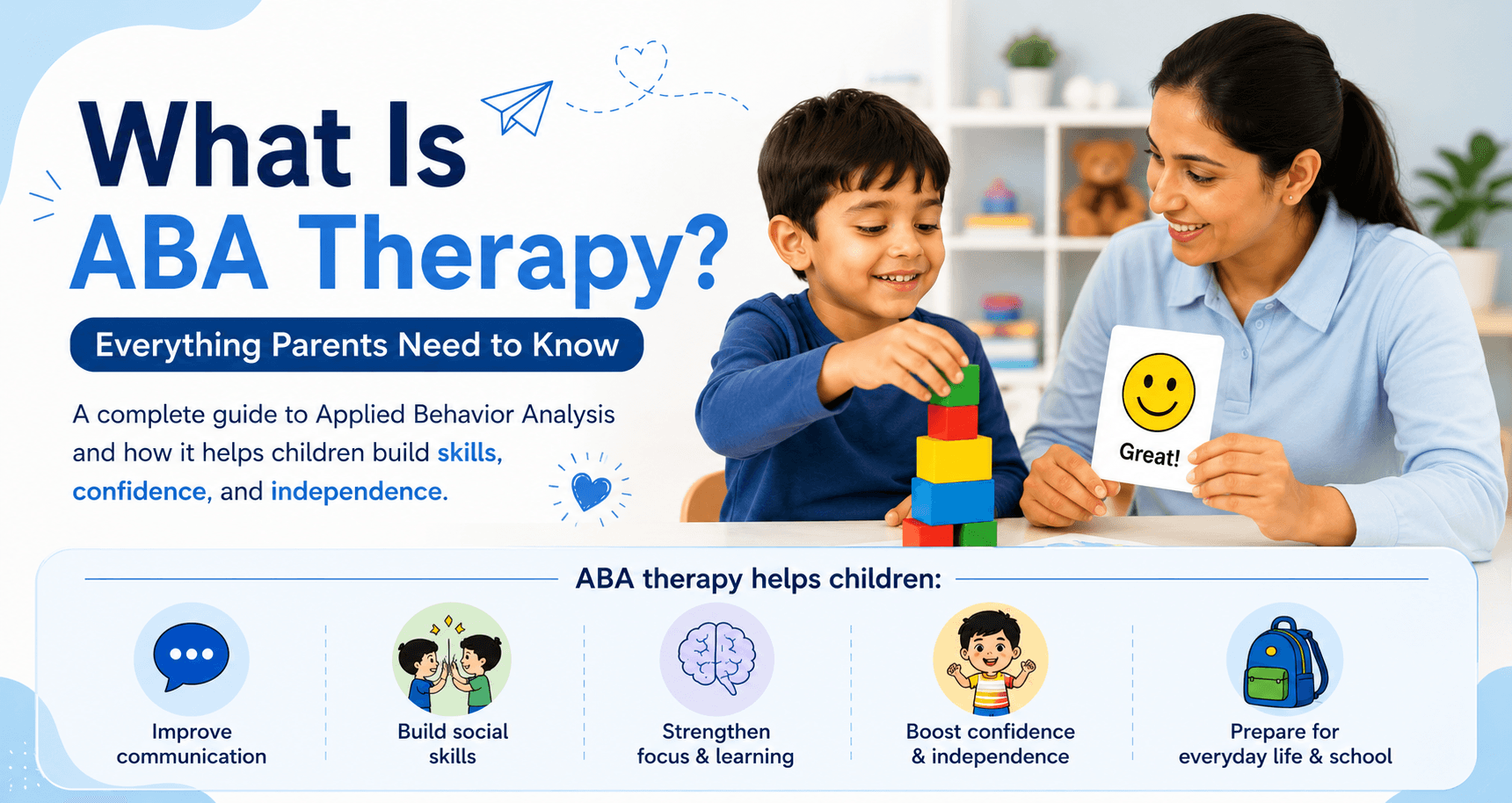
Have you recently been told that your child may benefit from ABA therapy?
Perhaps your paediatrician, therapist, or another parent mentioned it, but now you're left wondering:
"What exactly is ABA therapy?"
"Will my child enjoy it?"
"Is it just about changing behaviour?"
"How do I know if it's right for my child?"
Most parents worry about this.
Hearing unfamiliar medical terms can feel overwhelming, especially when you're already trying to understand your child's developmental journey.
The good news is that ABA therapy is not about changing who your child is. Modern ABA therapy focuses on helping children build meaningful life skills that make everyday activities easier, more enjoyable, and more independent.
This is something we see a lot at Siraa Health. Many parents arrive expecting a highly structured clinical programme and are pleasantly surprised to discover that therapy often looks like children learning through play, interaction, and positive experiences.
Let's explore what ABA therapy really is and why it has become one of the most widely used developmental therapies for children with autism.
ABA stands for Applied Behavior Analysis.
Simply put, ABA therapy is an evidence-based (supported by scientific research) approach that helps children learn new skills while reducing behaviours that interfere with learning and daily life.
Rather than focusing only on behaviours you want to stop, modern ABA therapy focuses on teaching behaviours you want to encourage.
These may include:
The goal isn't to make children behave like everyone else.
The goal is to help them communicate, participate, and navigate everyday life with greater confidence.
This is something we see a lot at Siraa Health. Parents often notice that as children develop new skills, many challenging behaviours naturally become less frequent.
Children learn best when learning is enjoyable.
Modern ABA therapy breaks larger skills into small, achievable steps.
Each step is practised repeatedly through fun activities until the child becomes confident.
For example, instead of expecting a child to suddenly greet people independently, the therapist may teach:
Every success is celebrated.
Children are encouraged through praise, play, favourite activities, or other positive experiences that motivate them to continue learning.
Learning happens gradually, one step at a time.
One of the most important principles of ABA therapy is positive reinforcement.
Positive reinforcement means rewarding behaviours you want to see more often.
For example:
If your child asks politely for a toy instead of crying, they receive praise or access to the toy.
Over time, children naturally begin repeating behaviours that lead to positive outcomes.
This approach helps learning feel enjoyable rather than stressful.
Modern ABA therapy avoids punishment as the primary strategy.
Instead, therapists focus on understanding why behaviours happen and teaching better ways to communicate needs.
This is something we see a lot at Siraa Health. Children often become more confident because they experience success throughout therapy sessions.
Every child receives an individualised therapy plan.
Some children may focus on communication, while others work on independence or social interaction.
Children may learn to:
For children who are non-speaking, therapists may introduce alternative communication methods when appropriate.
Children gradually learn skills such as:
These skills often help children build stronger relationships with family members and friends.
Many children experience big emotions but don't yet know how to manage them.
ABA therapy helps children learn to:
These practical skills increase independence.
Examples include:
Small everyday achievements often have a huge impact on confidence.
Many ABA programmes also prepare children for classroom environments.
Skills may include:
This is something we see a lot at Siraa Health. Parents are often amazed by how improving one skill can positively affect many other areas of development.
ABA therapy is commonly recommended for children with Autism Spectrum Disorder (ASD).
However, it may also support children who experience:
Every child is different.
A developmental assessment helps determine whether ABA therapy is appropriate for your child's individual needs.
When therapy is personalised and started early, children often make meaningful progress.
Potential benefits include:
The goal isn't perfection.
The goal is helping children participate more comfortably in everyday life.
This is something we see a lot at Siraa Health. Parents often tell us that the biggest changes happen at home, where everyday routines become calmer and more enjoyable.
Many parents think ABA therapy simply means correcting behaviour.
In reality, it's much broader than that.
| Traditional Behaviour Management | Modern ABA Therapy |
|---|---|
| Focuses mainly on stopping behaviours | Focuses on teaching new skills |
| May rely on consequences | Uses positive reinforcement and skill-building |
| Addresses behaviour itself | Explores why behaviour happens |
| Often reactive | Proactive and personalised |
| Same approach for everyone | Individualised for each child |
Modern ABA therapy recognises that behaviour is often a form of communication.
Rather than asking:
"How do we stop this behaviour?"
Therapists ask:
"What is the child trying to communicate, and what skill can we teach instead?"
One of the biggest questions parents ask is:
"What will my child actually do during therapy?"
The good news is that modern ABA therapy rarely looks like a traditional classroom.
Most sessions are designed to feel fun, engaging, and interactive.
Depending on your child's age and goals, an ABA therapy session may include:
Therapists naturally weave learning into these activities, helping children develop important skills while they play.
This is something we see a lot at Siraa Health. Parents are often surprised to see their children laughing, exploring, and enjoying therapy because it feels much more like a play session than a medical appointment.
ABA therapy is highly individualised.
It is not a "one-size-fits-all" approach, and not every child will have the same goals or therapy plan.
A developmental assessment helps identify:
Based on this assessment, therapists create a personalised programme that focuses on meaningful goals for your child and family.
The best ABA programmes adapt to each child's personality, interests, learning style, and pace.
Parents are one of the most important members of the therapy team.
Children spend far more time at home than they do in therapy sessions.
That's why ABA therapists work closely with parents to help them continue learning during everyday routines.
You may learn how to:
The goal isn't to turn parents into therapists.
It's to make everyday moments easier and more meaningful.
This is something we see a lot at Siraa Health. Children often make the greatest progress when therapists and parents work together as one team.
Parents often hear different opinions about ABA therapy.
Let's separate myths from facts.
| Myth | Fact |
|---|---|
| ABA is only for children with severe autism. | ABA can support children with a wide range of developmental and behavioural needs. |
| ABA is about forcing children to behave differently. | Modern ABA focuses on teaching useful life skills while respecting each child's individuality. |
| Therapy is repetitive and boring. | Most sessions use play, games, and activities that children enjoy. |
| Parents aren't involved. | Parent participation is one of the most important parts of successful ABA programmes. |
| Children need therapy forever. | Therapy goals change over time, and many children gradually become more independent as they develop new skills. |
This is something we see a lot at Siraa Health. Once parents understand what modern ABA therapy looks like, many of their initial worries disappear.
Every child progresses differently.
Some children benefit from a few hours each week, while others may need more intensive support depending on their goals.
Several factors influence therapy duration, including:
Rather than focusing on a fixed number of sessions, therapists regularly review progress and adjust goals as your child develops.
Remember, ABA therapy is about steady progress—not rushing milestones.
The earlier children receive appropriate support, the greater the opportunity to build important life skills.
During the early years, the brain is especially adaptable. This ability is called neuroplasticity, which means the brain can form new connections and learn more easily.
Early intervention can help children:
This is something we see a lot at Siraa Health. Small improvements made during the early years often lead to meaningful long-term progress.
Consider speaking with a developmental paediatrician or child development specialist if your child:
Don't wait for challenges to become bigger.
Seeking guidance early doesn't mean something is wrong.
It simply gives your child the best opportunity to receive support if they need it.
Hearing that your child may benefit from ABA therapy can bring many emotions.
You may feel uncertain, worried, or overwhelmed.
Most parents worry about this.
The good news is that ABA therapy is not about changing who your child is.
It's about helping them build the skills they need to communicate, learn, play, and become more independent in ways that respect their unique personality and strengths.
Every child develops differently.
With patience, understanding, and the right support, many children make remarkable progress.
If you have questions about your child's behaviour, communication, or development, seeking guidance is one of the most positive steps you can take.
Sometimes reassurance is all you need.
Sometimes early intervention can change a child's future.
ABA therapy helps children develop skills such as:
It is commonly recommended for children with autism but may also support children with other developmental or behavioural challenges.
Many children benefit from starting ABA therapy during the preschool years because the brain is developing rapidly.
However, children of different ages can benefit depending on their individual needs.
No.
While ABA therapy is most commonly associated with autism, some of its strategies may also help children with:
A professional assessment can help determine whether it is appropriate.
Sessions usually involve:
These activities help children practise communication, social, and daily living skills.
Modern ABA therapy is designed to be engaging and child-friendly.
No.
The goal of modern ABA therapy is not to change who your child is.
It focuses on helping children develop useful skills, reduce frustration, and become more independent while respecting their individuality.
The length of therapy varies for every child.
Progress depends on your child's:
Therapy plans are reviewed regularly and adjusted as children develop.
If your child has ongoing challenges with:
a developmental assessment can help determine whether ABA therapy or another type of support would be beneficial.
Get expert advice from Siraa Health doctors