
Siraa Health
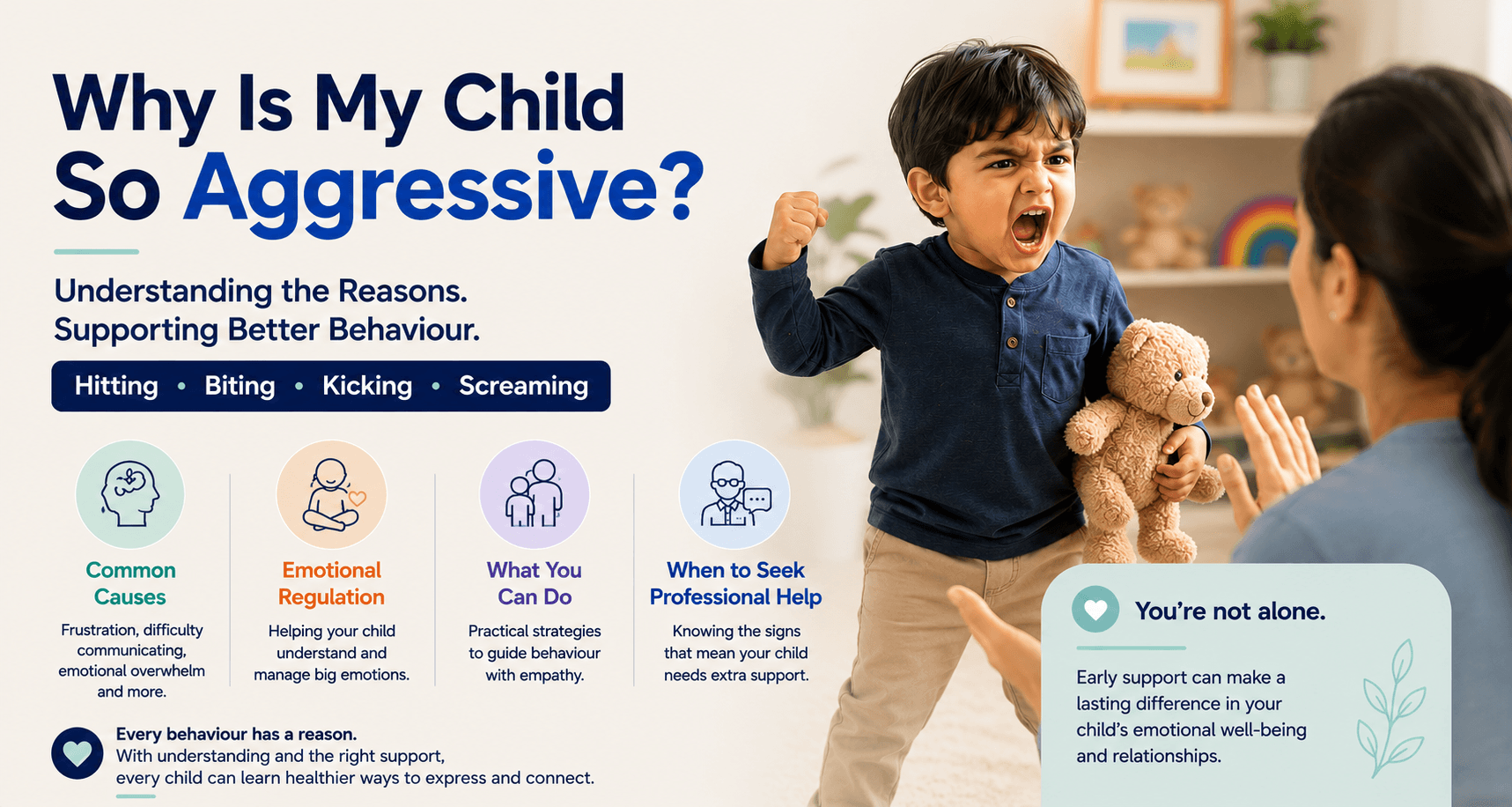
"Why does my child hit me when I say no?"
"My toddler bites other children when they're upset. Is this normal?"
"My child screams, kicks and throws things whenever they don't get what they want. What should I do?"
If you've asked yourself any of these questions, you're not alone.
Aggressive behaviour can be upsetting, especially when your child is hurting someone they love or struggling to calm down. But aggression doesn't automatically mean your child is "bad," badly behaved, or destined to have behavioural problems.
For young children, aggression can sometimes be a way of communicating feelings they don't yet know how to express.
Toddlers and preschoolers are still developing self-control. When frustration, anger, tiredness or overwhelm becomes too much, they may react physically because they haven't yet learned another way to handle those feelings.
This is something we see often at Siraa Health. The first step is not simply asking, "How do we stop the behaviour?" It's asking, "What is the behaviour trying to tell us?"
Children may become aggressive because they are frustrated, overwhelmed, tired, hungry, unable to communicate what they want, struggling with emotional regulation, or reacting to stress or changes around them.
Occasional hitting, biting, kicking or screaming can happen during early childhood, particularly when children are still learning to control impulses. However, aggression that is frequent, severe, causes injuries, affects school or relationships, or is difficult for the family to manage may need professional assessment.
Aggression can look different depending on your child's age.
You might notice:
Not every angry child is an aggressive child.
A child may cry loudly because they're disappointed or have a tantrum because they don't want to leave the playground. Aggression becomes more concerning when behaviour repeatedly involves intentionally hurting people, damaging things, or creating significant problems in daily life.
This is something we often discuss with parents at Siraa Health: the behaviour itself is only part of the picture.
There isn't always one reason.
Sometimes aggression is connected to a temporary situation. Other times, repeated aggression can point toward difficulties that need a closer look.
Imagine a toddler who wants a toy but doesn't have the words to explain what they want.
They may scream, grab, hit or throw the toy.
For young children, frustration can quickly become physical because communication and self-control are still developing.
Children experience big emotions before they have the vocabulary to describe them.
These are difficult ideas for young children to communicate.
Sometimes the feeling comes out as hitting, screaming or throwing.
Emotional regulation means being able to manage strong feelings and behaviour.
This skill develops over time.
A toddler cannot always stop themselves in the same way an older child or adult can. They need repeated opportunities to learn what to do when they're angry or frustrated.
A tired or hungry child may have much less patience.
Busy environments, too much noise, changes in routine, or too many demands can also overwhelm some children.
You may notice that aggressive episodes happen more often:
Keeping track of when aggression happens can help you identify patterns.
Children who struggle to communicate may become frustrated when others don't understand them.
This can happen with speech and language delays or other developmental differences.
If aggression frequently occurs because your child cannot communicate what they want or need, a developmental or speech-language assessment may be useful.
Children can react strongly to changes that adults may consider manageable.
For example:
Stress can sometimes appear as irritability, anger or aggressive behaviour rather than sadness.
Persistent aggression can sometimes occur alongside developmental or behavioural difficulties.
For example, some children with ADHD, autism, developmental delays, anxiety or other emotional difficulties may experience frustration or regulation challenges that contribute to outbursts.
That doesn't mean aggression automatically indicates any of these conditions.
It simply means that persistent aggression should be understood in the context of your child's overall development and behaviour.
When your child is hitting or biting, your first priority is safety.
Stay calm and use simple language.
For example:
"I know you're angry. I won't let you hit."
If your child is hurting another child, separate them calmly and make sure everyone is safe. The American Academy of Pediatrics recommends clear limits and teaching alternative behaviours rather than using physical punishment.
Your child is already experiencing a strong emotion.
Yelling, threatening or hitting back can increase the intensity of the situation.
Use short sentences.
"Hitting hurts. We don't hit."
Avoid long explanations while your child is highly upset.
Give them space when appropriate and reduce stimulation.
Once they're calm, you can talk about what happened.
Show your child what they can do instead.
For example:
"Say 'help me.'"
"Tell me you're angry."
"You can stomp your feet, but you can't hit."
Notice when your child handles frustration appropriately.
"You were angry, but you used your words. That's a great choice."
Positive reinforcement helps children learn which behaviours work.
Some reactions can unintentionally make the situation worse.
Avoid:
The goal is to teach your child that anger is allowed, but hurting people is not.
The American Academy of Child and Adolescent Psychiatry recommends teaching children rules and using positive reinforcement rather than relying on punishment alone.
One of the most useful things you can do is look for patterns.
Keep a simple record for a few days.
| Before the Behaviour | What Happened | After the Behaviour |
|---|---|---|
| Asked to stop playing | Child screamed and hit | Parent gave more playtime |
| Hungry before dinner | Child bit sibling | Snack was offered |
| Asked to share toy | Child pushed another child | Child was removed from activity |
| Transition to school | Child kicked and cried | Parent stayed and comforted |
This isn't about blaming yourself or your child.
It helps you understand what happens before and after the behaviour.
Sometimes the pattern itself reveals what your child needs help with.
Occasional tantrums and physical outbursts can occur in young children.
However, the frequency, severity, duration and impact matter.
| More Likely to Be Age-Related | May Need Professional Evaluation |
|---|---|
| Happens occasionally | Happens very frequently |
| Usually has an identifiable trigger | Happens with little apparent trigger |
| Child settles with support | Child remains extremely difficult to calm |
| No significant injuries | Causes injuries to self or others |
| Doesn't significantly affect daily life | Affects school, play or family life |
| Improving with consistent boundaries | Continues despite consistent strategies |
There isn't one number of outbursts that determines whether aggression is "normal."
Your child's age, development, environment and overall behaviour all matter.
Have you ever told your child, "Calm down", only to find that they become even more upset?
That's because calming down is a skill—not simply a choice.
Young children need adults to help them learn how to recognise emotions, manage frustration and choose safer ways to respond.
You can teach emotional regulation when your child is calm.
Try practising:
The American Academy of Pediatrics recommends helping children recognise strong emotions and develop strategies for calming and problem-solving.
This is something we see a lot at Siraa Health: children often need skills and support, not simply stricter punishment.
Consider speaking with your child's paediatrician or a child psychologist if aggression:
The AAP specifically recommends discussing persistent aggressive behaviour with a paediatrician when parents cannot manage it themselves, particularly when injuries, attacks on adults, school problems or safety concerns are present.
If your child is threatening serious harm to themselves or someone else, or you cannot keep your family safe, seek urgent professional help rather than trying to manage the situation alone.
Many parents worry that taking their child to a psychologist means their child will immediately be labelled or diagnosed.
That's not necessarily the case.
A child behaviour assessment may involve:
The goal is to understand why the behaviour is happening and what support could help.
Sometimes the answer is parent guidance and behavioural strategies.
Sometimes further developmental assessment or therapy may be recommended.
Not necessarily.
The right support depends on the cause and severity of the behaviour.
| What Your Child May Need | Possible Support |
|---|---|
| Occasional age-related tantrums | Parent guidance and consistent boundaries |
| Difficulty expressing emotions | Emotional regulation strategies |
| Communication difficulties | Speech and language assessment |
| Persistent behavioural difficulties | Behavioural assessment |
| Significant anxiety or emotional distress | Child psychology support |
| Developmental concerns alongside aggression | Developmental assessment |
| Ongoing aggression affecting daily life | Individualised behavioural intervention |
The aim isn't simply to make your child "stop being aggressive."
The aim is to help your child understand emotions, communicate needs and develop safer ways of responding.
A: Occasional hitting or biting can occur in toddlers because they are still developing language, impulse control and emotional regulation. However, frequent or severe aggression should be discussed with your child's paediatrician or a child development professional.
A: Young children may hit when they don't yet know how to express frustration or manage strong emotions. Stay calm, set a clear boundary such as "I won't let you hit," and teach an alternative way to communicate.
A: Respond immediately and calmly by stopping the behaviour and saying, "Biting hurts. We don't bite." Look for triggers such as frustration, tiredness or difficulty communicating and teach your child another way to express what they need.
A: Discipline should teach rather than simply punish. Clear rules, consistent boundaries and positive reinforcement can help children learn safer ways to behave. Physical punishment should be avoided because it can model aggression rather than teach children how to manage it.
A: Communication difficulties can contribute to frustration when a child cannot express what they want or need. However, speech delay is not the only possible cause of aggression, so it is useful to look at your child's overall development and behaviour.
A: Consider professional support when aggression is frequent, severe, causing injuries, affecting school or relationships, or becoming difficult for your family to manage. A psychologist can help identify triggers and teach your child and family practical strategies.
A: No. Aggression by itself does not diagnose ADHD, autism or another developmental condition. If aggression occurs alongside concerns about communication, attention, social interaction or development, a broader assessment can help understand the full picture.
Get expert advice from Siraa Health doctors