
Siraa Health
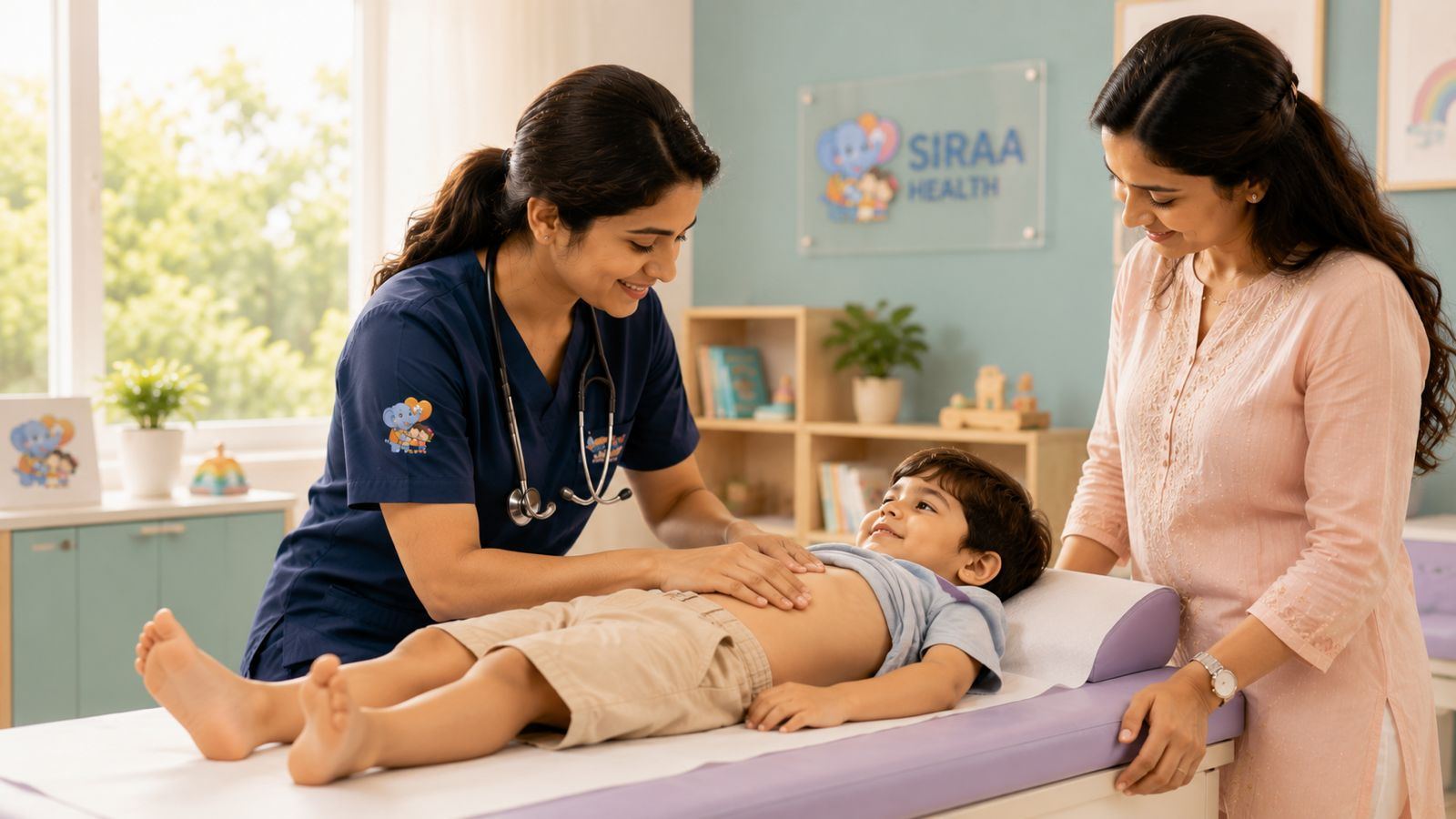
The illness is usually a virus. The danger is dehydration. We help you manage the first and prevent the second — with same-day slots when you're worried.
4870+
Families supported
20+
Years experience
IAP
Certified vaccination
How do I know if my child is dehydrated?
Warning signs of dehydration in children are: fewer wet nappies or no urine for 6–8 hours, dry mouth and tongue, no tears when crying, sunken eyes, unusual drowsiness, and a sunken soft spot in babies. A child showing these signs, or one who vomits back every sip of ORS, needs a pediatrician the same day.
Signs to watch
Red flags
See a doctor immediately if your child shows any of these signs.
Understanding
Viral gastroenteritis — including rotavirus in unvaccinated infants (the most common cause)
Food-borne bacterial infections, more frequent in summer and monsoon
Contaminated water — a recurring Gurgaon problem in the rains
Antibiotic-associated loose stools
In infants: overfeeding or feed intolerance can mimic infection
Rarely, surgical causes — which is why green vomiting and severe pain always need review
Our approach
Assess hydration first
The examination that matters most: how dry is this child? That answer drives everything else.
ORS, taught properly
Small sips every few minutes beats a full glass that comes right back up. We show you exactly how, with amounts for your child's weight.
Zinc and the right diet
Zinc shortens diarrhea in children. Food continues — starving a child with diarrhea is outdated and harmful.
Medicines used judiciously
Anti-vomiting medicine when it enables oral rehydration; antibiotics only for specific bacterial infections — never routinely.

Evidence-based care
Every decision guided by the latest pediatric science
At home
Parent stories
“Our son was not saying a single word at 2.5. Within four months at Siraa he was putting two and three words together. The parent coaching made the biggest difference.”
Priya M.
DLF Phase 4
“We were told to wait and see. We did not, and I am so glad. The therapist identified exactly what was holding him back. Six months later he is chatting non-stop.”
Rahul K.
Sohna Road
“What sets Siraa apart is that they treat you as a partner, not just a parent dropping off a child. Every session I left feeling more capable and less worried.”
Sneha T.
Sector 56
Questions
As a rule of thumb, give 10 ml per kg of body weight after each loose stool or vomit — for a 10 kg child, about 100 ml, offered as small sips over 10–15 minutes. Continue normal feeds alongside. If vomiting persists beyond a few hours despite slow sips, see a doctor.
No. Continue breastfeeding fully, and most children can continue normal milk and dairy. Stopping feeds weakens the child without shortening the illness. Only a minority develop temporary lactose intolerance, which your pediatrician can identify.
Rarely. Most childhood diarrhea is viral, and antibiotics don't help — they can even prolong some infections. Antibiotics are reserved for specific situations such as dysentery (blood in stool) or cholera-like illness, diagnosed by a doctor.
Keep feeding normal, easy foods: khichdi, curd rice, dal, banana, chapati, soups. The old advice to rest the gut is wrong — continued feeding helps the intestine recover faster. Avoid juices, fried food and colas until fully recovered.
Siraa Health, Sector 67, Gurgaon, Haryana · Mon–Sat 9:00 AM – 7:00 PM · Sunday Closed
+91 93197 41273